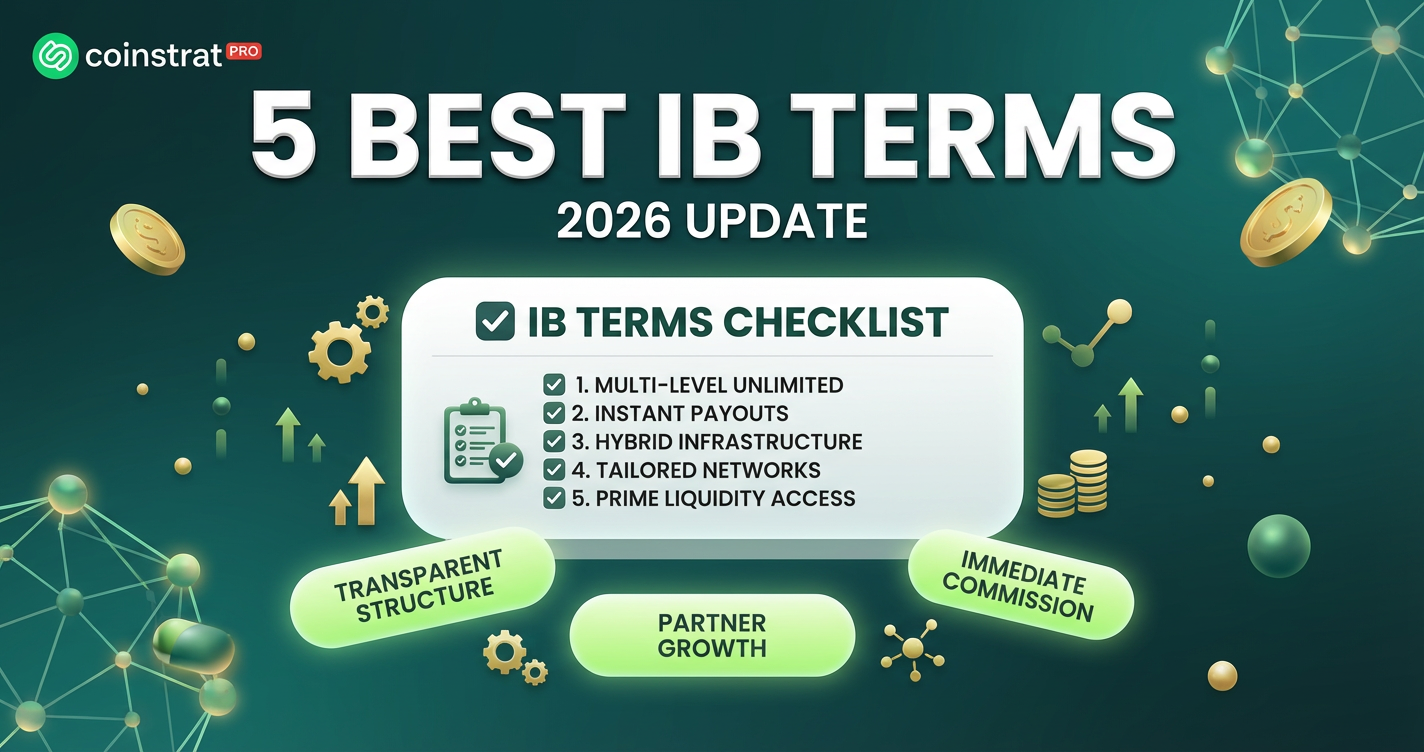
If you have spent any time in the forex partner space, you know the frustration of the “invisible ceiling.” You build a network, your clients trade high volumes, but your commissions are capped by rigid tiers, or worse, your payouts are delayed by “compliance reviews” that seem to trigger exactly when your earnings spike. In 2026, the landscape for Introducing Brokers (IBs) has shifted. It is no longer just about who offers the highest CPA; it is about infrastructure, asset diversity, and execution transparency.
The distinction between a mediocre partnership and a wealth-generating engine lies in the fine print of the broker’s operational model. A partner program is only as strong as the broker’s ability to retain your clients. If the broker’s execution model causes slippage that wipes out your traders, your “lifetime commission” is actually just a three-month flash in the pan. A truly elite IB setup requires a hybrid approach that aligns the broker’s incentives with your own.
1. Assessing Localized vs. Global Depth of Commission Levels
The best forex IB terms in 2026 prioritize three factors: depth of commission levels, frequency of payouts, and asset diversity. Top-tier programs now offer instantly accessible rewards and the ability to earn across multiple asset classes including Crypto, ETFs, and Indices from a single partner link. This evolution represents a departure from the “single-tier” referral links of the past, moving toward a sophisticated multi-level marketing structure that rewards network growth rather than just direct sales.
Explore deep commission levels and diverse asset opportunities with modern forex IB programs.
For high-volume partners, “Unlimited Level” structures are the gold standard. In traditional models, you might earn from your direct clients (Tier 1) and perhaps a small fraction of their sub-IBs (Tier 2). However, modern hybrid brokers like Coinstrat Pro have removed these caps, allowing you to earn as deep as your network goes. This creates a compounding effect where your primary role shifts from “recruiter” to “network manager,” a far more sustainable and scalable business model.
The Architecture of Modern IB Rewards
-
Markup Customization: The ability to adjust markups on raw spreads allows you to tailor your offering. High-frequency scalpers need thin spreads, while long-term swing traders may be less price-sensitive, allowing for higher rebates.
-
Secondary Revenue Streams: It is no longer just about pips. Leading programs allow IBs to share in performance fees, subscription fees, and even management fees if their clients are following Master Traders within a social copytrade ecosystem.
-
Geographic Agility: Global connectivity, supporting SWIFT, SEPA, and instant crypto transfers, ensures that your network isn’t limited by banking borders.
2. A-Book vs. B-Book vs. Hybrid: The Impact on Partner Longevity
For IBs, the broker’s execution model dictates client retention. A-Book models offer transparency but sometimes higher spreads, while B-Book can offer tighter spreads but possible conflicts of interest. The hybrid model optimizes this by routing toxic flow while internalizing stable flow, ensuring competitive pricing and platform stability. This balance is critical because if a broker is “pure B-Book,” they profit when your clients lose—a fundamental misalignment for any IB looking to build a long-term business.

Understand the impact of A-Book, B-Book, and hybrid execution models on client retention, represented by a complex server network.
Model Type Execution Logic Pros for IBs Cons for IBs A-Book (STP/ECN) Orders passed directly to Liquidity Providers (LPs). No conflict of interest; broker wants client to trade more. Higher spreads; potential for slippage during news. B-Book (Market Maker) Broker takes the opposite side of the trade. Ultra-tight spreads; instant execution. Broker profits from client losses; risk of “stop hunting.” Hybrid Model Profitable/large traders A-Booked; others B-Booked. Combines tight spreads with long-term stability. Requires high-tier institutional technology to manage correctly.
When evaluating best b-book vs a-book IB models, the hybrid infrastructure (often powered by terminals like cTrader) stands out. By utilizing a hybrid model, brokers can offer “Razor Thin Spreads” from 0.0 pips (a B-Book advantage) while ensuring that during high-volatility events, trades are filled via Tier-1 liquidity providers (an A-Book safeguard). For the IB, this means fewer complaints about execution and higher client “Lifetime Value” (LTV).
3. Why ‘Instant Payouts’ are the New Industry Standard
In 2026, waiting 30 days for a commission payout is a relic of the past. The industry has moved toward real-time financial gratification. The best forex IB terms now include Instant Payouts, where commissions are credited to the IB’s wallet the moment a client closes a trade. This is not just a convenience; it’s a cash-flow lubricant for your marketing efforts.

Experience the convenience of instant commission payouts, crediting earnings to an IB’s wallet immediately after a client’s trade closes.
Consider an IB running paid traffic on social media. If they have to wait a month to see their earnings, their “ad spend” is locked up, slowing their growth. With instant payouts, an IB can reinvest their commissions into their marketing machine daily. This creates a high-velocity growth cycle that distinguishes elite partners from those struggling with traditional brokerage delays.
“The hallmark of a professional-grade broker in 2026 is the removal of friction between the close of a trade and the availability of the reward.”
4. The Competitive Edge of Multi-Asset Visibility
Modern IBs must offer more than just Forex to stay competitive. By providing access to 1,200+ instruments, including metals, energies, and cryptocurrencies, partners can capture commission on a wider variety of market movements, significantly increasing the average revenue per user (ARPU) across their entire network. When the FX markets are sideways, your clients might be trading Gold (XAUUSD) or Bitcoin (BTC), and your commission stream should reflect that diversity.
Capturing the Crypto-Native Audience
The intersection of traditional finance and crypto is where the most significant growth is happening. A broker that provides a Spot Crypto Wallet alongside traditional MT4/MT5/cTrader accounts allows IBs to recruit from two different worlds. Helping a crypto investor transition into the world of Indices or ETFs (and vice versa) doubles the IB’s touchpoints. Furthermore, in a hybrid environment, IBs can earn from “Earning Programs” (interest on idle crypto) and traditional trading rebates simultaneously.
The “Total Wallet” Strategy
Instead of your clients having one account for FX, one for Crypto, and one for Stocks, a multi-asset broker consolidates their entire portfolio. For the IB, this is the ultimate “sticky” feature. The harder it is for a client to unbundle their financial life, the longer they stay in your network. Access to 1:500 leverage across these varied asset classes further incentivizes large-volume trading, which directly impacts the IB’s bottom line.
5. Institutional Technology as a Recruitment Tool
Your “terms” as an IB are only as good as the tools you can give your sub-IBs and clients. In 2026, providing a standard web-trader is no longer enough. High-performance traders demand millisecond execution (less than 100ms) and advanced risk management tools. When you partner with a broker using institutional-grade tech like Coinstrat cTrader, you aren’t just selling a platform; you are selling an advantage.
For Master Traders who want to scale their Assets Under Management (AUM), the technology must support granular copytrade allocations. If an IB can offer 6 different allocation methods (Lot-to-Lot, Equity-to-Equity, etc.) and the ability to “Reverse Copy,” they can attract a more sophisticated class of investor. These are not “get rich quick” retail traders; these are wealth managers looking for professional infrastructure. Attracting one Master Trader with 100 followers is more efficient than recruiting 100 individual retail traders.
Risk Management: The IB’s Secret Retention Tool
Most IBs focus on the “buy” side, but longevity is built on the “stop” side. The best programs offer customizable risk controls, such as Equity Risk Limits and automated trailing stops across the entire copytrade network. When your clients use these tools, they stay in the game longer. As an IB, your goal is “trading volume longevity,” not “one-time deposits.” Technology that protects the client’s capital inherently protects the IB’s commission stream.
In summary, the transition to a hybrid, multi-asset, and instant-payout model represents the “North Star” for IBs in 2026. By focusing on models that eliminate the conflict of interest between broker and trader while maximizing the technical tools available to the investor, IBs can build a truly scalable, multi-generational income stream.
Actionable Next Step: Review your current partner dashboard. If you cannot see your commissions in real-time or if your network is capped at two or three levels, you are leaving significant capital on the table. In the competitive environment of 2026, loyalty to a legacy broker is often the biggest obstacle to an IB’s growth.
FAQ
Why should an IB care if a broker uses an A-Book or B-Book model?
The broker’s model determines the sustainability of your income. An A-Book model removes the conflict of interest, ensuring the broker benefits when your clients succeed and trade more. A B-Book model may offer lower spreads to attract clients, but if the broker “wins” when your clients “lose,” you risk high client turnover and damage to your reputation.
Do hybrid models provide better slippage protection for my clients?
Yes. Hybrid models typically route trades to external Liquidity Providers (A-Book) during high volatility or for institutional-sized orders. This prevents the “order rejection” or extreme slippage often seen in pure B-Book environments, helping your clients get fair fills even in turbulent markets.
How does the 1:500 leverage affect my commission on raw spread accounts?
While leverage doesn’t change the commission per lot, it allows your clients to control larger positions with less margin. On raw spread accounts where commissions are fixed per million traded, higher leverage can lead to increased trading volumes and, consequently, higher total commissions for the IB—provided the client manages their risk effectively.
Are swap-free accounts available for Islamic finance clients in my network?
Most top-tier brokers in 2026, including Coinstrat Pro, offer swap-free (Islamic) account options. This is essential for IBs looking to expand their network into the MENA region or among Muslim traders globally, ensuring inclusivity and compliance with Sharia law regarding interest.