You’ve spent years perfecting a strategy. Your Sharpe ratio is enviable, your drawdowns are controlled, and your local circle of investors is growing. But you’ve hit the “glass ceiling” of manual management. Logging into twenty different accounts to place the same EUR/USD trade isn’t just tedious; it’s a recipe for catastrophic slippage and human error. This is the exact moment when the transition from “trader” to “fund manager” requires a technological leap.
PAMM and MAM structures are the unsung heroes of the high-finance world for retail professionals. They transform a single talented individual into a scalable investment house. By using a professional ecosystem like Coinstrat Pro, which bridges the gap between traditional brokerage and social copytrading, managers can finally stop focusing on administrative headaches and start focusing on alpha.
7 essential features to look for in MAM broker platforms
A professional MAM (Multi-Account Manager) broker must provide millisecond execution, server-side allocation, and support for diverse fee structures. Key features include the ability to handle large AUM without slippage, transparent reporting for sub-accounts, and the flexibility to manage multiple asset classes from a single master terminal. If the platform feels like a clunky web interface from 2010, your institutional clients will run for the hills.

Efficient MAM platforms provide millisecond execution and comprehensive reporting across multiple financial instruments.
Feature Why it Matters for Scaling Institutional Standard Server-Side Allocation Ensures all trades execute simultaneously across sub-accounts without latency. Mandatory for HFT and Scalping Asset Diversity Allows managers to hedge FX with Gold, Crypto, or Indices from one margin pool. 1,000+ Instruments Deep Liquidity Prevents “order rejection” when your AUM grows from $100k to $10M. Tier-1 Bank Feeds Custom Fee Logic Enables automated collection of performance, management, and joining fees. High-Water Mark Support Master Terminal A single login to manage 1,000+ sub-accounts with “Bulk Close” features. cTrader or MT5 Integration White Label Potential The ability to brand the investor portal as your own “Fund.” Full API Access Reporting Tools Automated daily/monthly PDF equity statements for all investors. Real-time Transparent Sync
When evaluating mam broker platforms, the distinction between server-side and client-side allocation is the “make or break” factor. Client-side tools often lag, meaning the last investor in your list gets a significantly worse price than the first. In 2026, top-tier brokers utilize server-side logic where the trade is executed as one block and then virtually partitioned, ensuring fair execution for every dollar under your care.
The core benefits of PAMM account structures for fund managers
PAMM (Percentage Allocation Management Module) accounts allow managers to pool investor capital into one ‘Master’ account. Profits and losses are distributed proportionally based on the percentage of total capital each investor contributes, simplifying the management of hundreds of clients into a single trading operation. It is the ultimate “set it and forget it” infrastructure for distribution.

PAMM accounts simplify fund management by pooling capital and distributing returns proportionally among investors.
The beauty of the PAMM model lies in its mathematical simplicity. If you have a $100,000 master account and Investor A contributes $10,000, they own 10% of the pool. If you win $1,000 on a trade, Investor A automatically sees a $100 increase. This automation removes the need for manual bookkeeping, which is the primary barrier for traders looking to start a copy trading fund.
Beyond the math, PAMM structures offer significant “house rules” advantages. The master trader operates with a pool of capital, which often allows for better margin management. Since all funds are consolidated into a single sub-account on the broker’s server, you aren’t restricted by the small balance limitations of individual retail accounts. This is particularly vital when trading volatile assets where “breathing room” or margin buffers are required to survive short-term spikes.
Furthermore, PAMM structures provide a layer of regulatory and transparency comfort. Investors can usually see their equity in real-time but cannot interfere with the trades. This separation of “capital ownership” and “trading authority” protects the manager’s strategy from being disrupted by panicked investors closing positions mid-swing.
Why 2026 demands a hybrid approach to account management
Traditional PAMM/MAM models are evolving. Modern managers now require ‘Hybrid’ systems that combine the deep technical controls of a MAM with the social proof and lead-generation capabilities of a copy trading leaderboard to attract at-scale investment efficiently. The world of “dark pools” and managed accounts hidden behind email threads is dying.

The evolving financial landscape demands hybrid account management systems for comprehensive control and social engagement.
Today’s investors are savvy. They don’t just want a monthly return; they want to see your “skin in the game” and your historical drawdown on a public leaderboard. This is where Coinstrat Pro excels, acting as a hybrid broker that merges the institutional-grade execution of mam broker platforms with a community-centric ecosystem. Managers can leverage the leaderboard to gain visibility, effectively turning the platform into a lead-generation machine for their fund. For more on this evolution, check out the future of financial trading with hybrid solutions.
Integrating modern assets into the mix
The 2026 landscape isn’t just about EUR/USD and Gold. Investors are increasingly looking for managed exposure to Crypto and ETFs. A traditional MAM that only supports Forex is no longer competitive. Modern managers need to manage a diversified portfolio that might include spot Bitcoin, S&P 500 ETFs, and legacy FX pairs simultaneously. A hybrid model allows for this multi-asset flexibility, ensuring that when the Forex markets are sideways, you can capture volatility in the crypto or equity sectors without moving capital between different brokers.
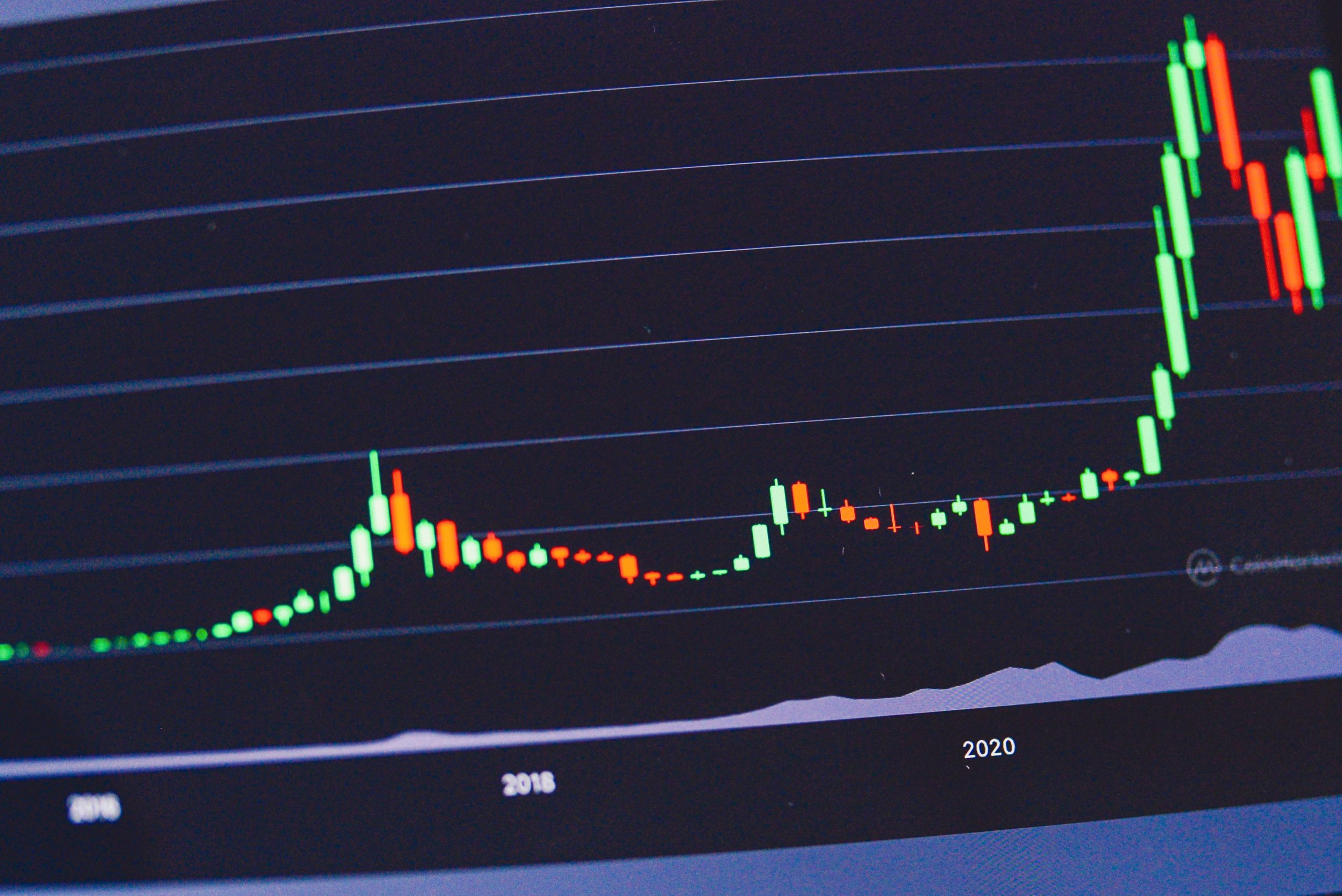
Modern account management platforms must support diverse assets like crypto and ETFs to meet investor demands.
“The modern fund manager isn’t just a trader; they are a technologist who understands that distribution is as important as execution.”
Methods for optimizing fee structures to maximize manager revenue
Success in managing external capital requires more than just performance fees. Top-tier platforms now offer up to six fee types, including management fees, subscription costs, and volume-based rewards, allowing managers to monetize their expertise across different investor profiles. If you are only charging a 20% performance fee, you are leaving money on the table.
Let’s break down how a high-level manager scales their revenue through diverse monetization:
-
Performance Fees: The classic “20% of profits” model. Usually paired with a High-Water Mark (HWM) to ensure you only get paid when the account hits new all-time highs.
-
Management Fees (AUM fee): A small percentage (e.g., 1-2% annually) charged regardless of performance. This covers your operational “lights on” costs.
-
Volume-Based Fees: Earning a small rebate or markup on every lot traded. This is particularly lucrative for high-frequency or scalping strategies.
-
Subscription or Joining Fees: A flat fee for the privilege of accessing a high-demand strategy.
Automating these payouts is critical. Professional pamm account brokers handle the billing internally. You shouldn’t have to invoice your 500 investors; the system should automatically deduct the fee and credit your wallet. This creates a seamless experience for the investor and guarantees your income as the manager. For those looking to maximize their passive returns, exploring competitive interest rates on idle capital within your management ecosystem can add another layer of revenue.
Scaling with Unlimited Level IB Structures
A manager can only trade; they can’t always be the salesperson. This is where the Introducing Broker (IB) network becomes the “force multiplier” for your AUM. While many brokers cap referral levels, the most advanced hybrid platforms allow for unlimited multi-level structures. This means you can recruit “Master IBs” who recruit their own sub-IBs to market your fund.
By offering customized commission structures, you incentivize a global sales force to funnel capital into your PAMM or MAM. This ecosystem of “Master Trader + High-Tech Broker + Ambitious IB” is the holy trinity of wealth management in the digital age. It’s the difference between managing $1 million and $100 million. Many managers even participate in trading contests, such as the Dubai Contest 2025, to gain the visibility needed to attract these high-level partners.
Advanced Risk Controls: Protecting the AUM
Scaling isn’t just about growing; it’s about not blowing up. Professional platforms provide “Equity Stop” and “Risk Ratio” controls. As a manager, you can set hard limits so that if a black swan event occurs, the system automatically disconnects all sub-accounts at a specific drawdown level. This institutional-grade safety net is what allows large-scale investors to trust you with seven or eight-figure sums.
In conclusion, the path to becoming a top-tier fund manager in 2026 is paved with the right tech stack. By choosing a broker that offers the flexibility of a MAM, the transparency of a social platform, and the multi-asset reach of a hybrid model, you move from the “trading trenches” into the “commander’s chair” of your own financial empire.
Actionable Roadmap for Managers:
-
Audit your strategy: Ensure your execution lag is minimal on mam broker platforms.
-
Setup your fee tiers: Don’t just stick to performance fees; add a management fee for stability.
-
Build your leaderboard profile: Use hybrid social tools to show off your track record.
-
Recruit your IBs: Offer them “Unlimited Levels” and instant payouts to keep them motivated.
FAQ
Can I use an Expert Advisor (EA) within a MAM account?
Yes. Most professional MAM platforms, especially those integrated with cTrader or MetaTrader, fully support Expert Advisors. The EA is placed on the Master account, and the MAM software instantly replicates the trades to all sub-accounts based on the chosen allocation method (Lot, Equity, or Percentage). This allows for 24/7 automated management of massive capital pools.
What are the typical performance fee structures for PAMM managers?
While 20% is the industry standard (the “Hedge Fund” model), high-performing managers with a long-term track record often charge between 30% and 50%. Most reputable brokers enforce a “High-Water Mark,” meaning the manager only earns a performance fee if the fund’s value exceeds its previous peak, protecting investors from paying for the recovery of previous losses.
Does a MAM broker allow for different leverage levels per sub-account?
Generally, the leverage is determined at the account level. However, a MAM allows for “Allocation Ratios.” This means if a Master Trader opens 1 lot, an investor with a higher risk appetite could be set to mirror that trade at a 2x ratio (essentially 2 lots), while a conservative investor mirrors it at 0.5x. This allows for personalized risk management within the same master strategy.
How quickly can investors withdraw funds from a PAMM structure?
This depends on the broker’s “Settlement Period.” Most modern PAMM/MAM brokers offer daily or even “on-demand” withdrawals. However, to prevent disruption of active trades, many managers set specific “Withdrawal Windows” or “Notice Periods.” Instant internal transfers, like those offered by hybrid brokers, have significantly reduced the wait time for capital access.