
Imagine you’re sitting at a café, and the person at the next table is a hedge fund manager consistently hitting 20% annual returns. If they offered to let you mirror every move they made with your own brokerage account—automatically and in real-time—you’d likely jump at the chance. This is no longer a localized fantasy; it is the 10-billion-dollar reality of social trading in 2026.
However, as the market matures, the gap between a “standard” broker and a high-performance ecosystem has widened. For a retail investor, the wrong platform choice results in slippage that eats your profits before they even settle. For a Master Trader, a restrictive platform caps your earning potential just as you start to scale. To navigate this, you need to look past flashy ROI percentages on a leaderboard and scrutinize the actual infrastructure. Here are the ten essential features that define the upper echelon of social trading today.
1. Granular Risk Management and Equity Stop Losses
The most common tragedy in copy trading occurs when a follower realizes, too late, that their chosen Master Trader has a “diamond hands” mentality during a market crash. The best social trading platforms must offer granular risk management, specifically an equity-based stop loss. This allows a follower to set a hard limit—for instance, “if my allocated capital drops by 15%, disconnect me immediately and close all positions.”

Implementing granular risk management with equity stop losses is crucial for followers to mitigate potential losses in copy trading.
Advanced platforms like Coinstrat Pro go further by allowing users to set these limits on a per-trader basis. Unlike a simple trade-level stop loss, an equity stop loss protects your entire wallet from a strategy that might be technically winning but is enduring a drawdown deeper than your personal risk tolerance can handle. This feature effectively turns a copy trading platform with stop loss capabilities into a self-curated hedge fund where you are the ultimate risk officer.
2. Multiple Allocation Methods: Beyond Simple Mirroring
Standard platforms often force a “proportional” allocation, where if a leader risks 1% of their account, you risk 1% of yours. While fair, this isn’t always optimal. Top-tier platforms offer diverse ways to distribute capital. Understanding these is vital for aligning your risk with the Master Trader’s strategy.

Beyond simple mirroring, diverse allocation methods empower followers to customize their capital distribution strategy.
Allocation Method How It Works Best For… Fixed Lot Every trade is a set size (e.g., 0.1 lots) regardless of the leader’s size. Testing a new trader with minimal exposure. Proportional Mirrors the ratio of the leader’s balance to their trade size. Standard hands-off mirroring. Volume Ratio Allocates a specific multiplier (e.g., 2.0x) of the leader’s volume. Aggressive growth for high-conviction followers. Equity-to-Equity Adjusts size based on the fluctuating relative equity of both accounts. Active accounts with frequent deposits/withdrawals.
3. Institutional-Grade Execution (The Millisecond Rule)
Execution speed is the backbone of social trading; even a few pips of slippage can turn a leader’s profit into a follower’s loss. High-performance platforms utilize millisecond execution and deep liquidity providers to ensure that the follower’s entry price mirrors the Master Trader’s as closely as possible. If a Master Trader scalps for a 5-pip profit and your platform has a 200ms delay, you might enter 3 pips late, effectively losing 60% of the potential profit before the trade even moves.
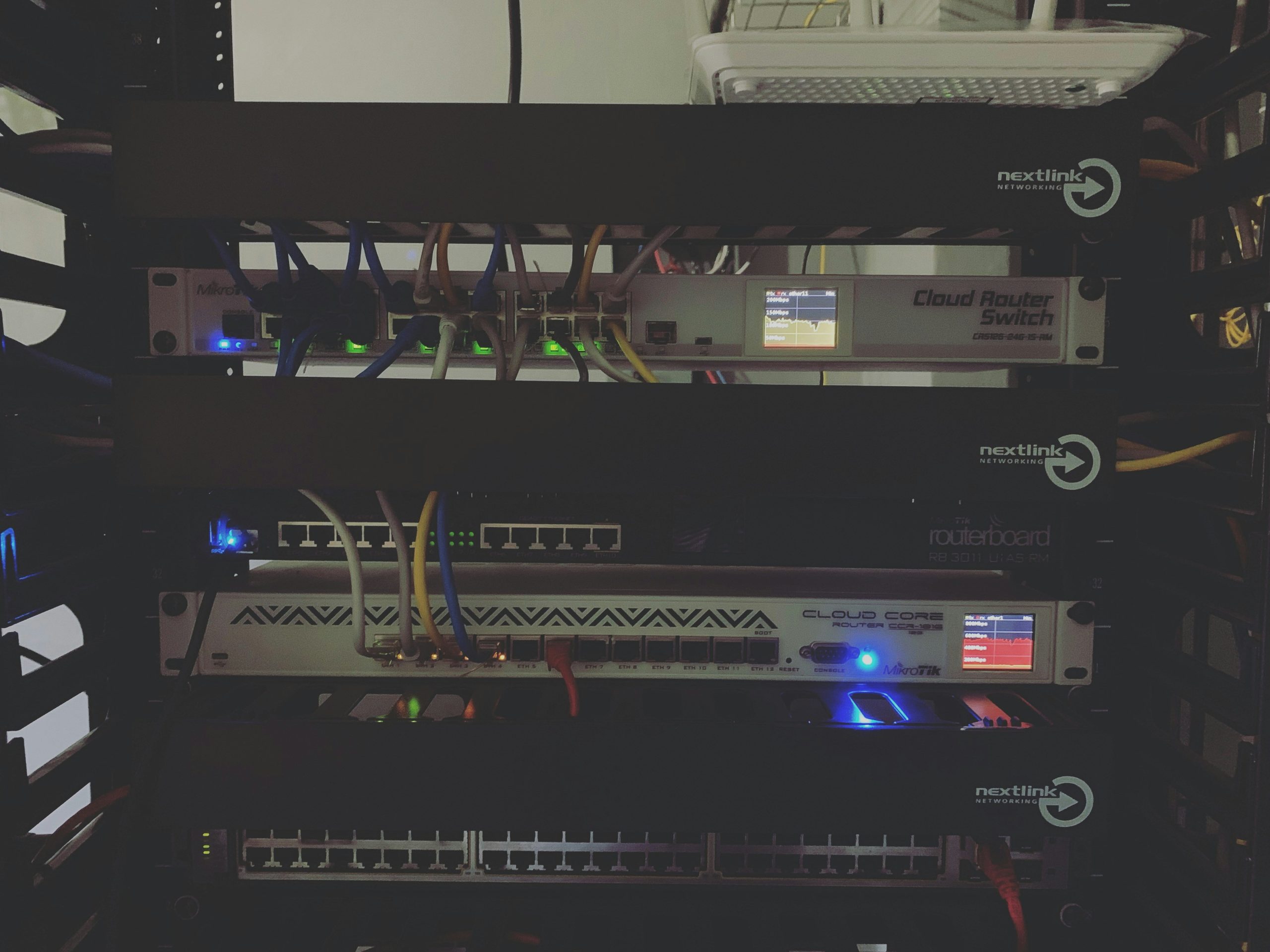
Institutional-grade execution speed, often measured in milliseconds, is vital for precise trade mirroring in social trading.
This is why integration with professional terminals like cTrader is a hallmark of elite brokers. These systems are engineered for high-frequency environments, ensuring that when the “Master” hits buy on gold, the “Follower” orders are executed almost simultaneously in the global liquidity pool. For a deep dive into how these systems function, the Binance AMA replay provides excellent context on hybrid brokerage infrastructure.
4. Multi-Asset Accessibility from a Single Margin Account
In 2026, a social trading platform restricted to only Forex is obsolete. The best ecosystems allow you to follow a crypto specialist, a NASDAQ swing trader, and a gold scalper all from one unified account. This cross-margin capability allows for superior diversification. When tech stocks are sideways, your capital can be working in the volatile crypto markets or seeking safety in metals.

A unified margin account allowing multi-asset accessibility enhances diversification and trading opportunities.
Coinstrat Pro, for instance, offers access to over 1,200 financial instruments. This diversity isn’t just about choice; it’s about survival. By spreading risk across FX, Stocks, and ETFs, followers can mitigate the specific “sector risk” that occurs if they only follow traders in one asset class.
5. Sophisticated Monetization for Master Traders
To attract the best trading talent, a platform must provide more than just a 20% performance fee. Professional traders are essentially running a business, and they need diverse ways to charge for their “intellectual property.” High-end platforms offer up to six distinct fee types:
-
Performance Fee: Percentage of net profits.
-
Management Fee: Annualized percentage of AUM.
-
Volume Fee: Small fee per lot traded.
-
Subscription Fee: Fixed monthly cost for access.
-
Joining Fee: One-time entry cost.
-
Profit Sharing: High-water mark protected payouts.
This flexibility ensures that a Master Trader can build a sustainable model, whether they are a high-frequency scalper (Volume fee) or a long-term macro investor (Management fee).
6. Unlimited Multi-Level IB Structures
For financial influencers and Introducing Brokers (IBs), the “refer-a-friend” model is no longer sufficient. The modern standard is the Unlimited Level IB program. This allows a partner to build a deep network where they earn commissions not just on their direct referrals, but on the referrals of those referrals, to an infinite depth.
This architecture encourages partners to act as mentors, helping their network find the right Master Traders to copy, which in turn increases the total Assets Under Management (AUM). When combined with instant commission payouts—rather than the industry-standard 30-day wait—this creates a powerful incentive for professional wealth managers to move their foundations to hybrid platforms.
7. Radical Transparency and Verified Track Records
“Don’t show me your gains, show me your drawdowns.”
The best social trading platforms provide more than just an ROI curve. They offer “Verified” badges and deep analytical dives into a trader’s history. This includes the maximum drawdown (MDD), the average trade duration, and whether the trader uses “toxic” strategies like Martingale (doubling down on losses). A transparent leaderboard should let you filter by “Risk Score,” allowing you to find consistent earners rather than “one-hit wonders” who gambled their way to the top of the rankings.
8. Hybrid Infrastructure: Bridging Crypto and TradFi
One of the most innovative shifts in 2026 is the “Hybrid Broker” model. This allows users to hold their balance in stablecoins like USDT while trading traditional indices like the S&P 500 or Forex pairs. This solves the “banking friction” experienced in many regions. Furthermore, the ability to earn competitive interest rates on idle digital assets within the same platform means your capital is always working, even when you aren’t active in a copy trade.
9. Real-Time Interactive Social Feeds
Social trading shouldn’t be a “black box.” The best platforms incorporate a community layer where Master Traders can share their charts, explain their rationale during a drawdown, and interact with their followers. This educational component transforms copy trading from a passive investment into an active learning experience. Watching a pro navigate a central bank interest rate decision in real-time is often more valuable than any textbook. To understand the future of this trend, exploring Coinstrat Pro’s hybrid solutions provides a roadmap for how social and technical trading are merging.
10. Reverse Trading and Portfolio Control
Sometimes, the “crowd” is wrong. Sophisticated platforms offer a “Reverse Copy” feature, allowing you to automatically take the opposite side of a trader’s position. While niche, it is a powerful tool for fading sentiment. More importantly, the ability to pause a copy relationship without closing existing positions is crucial. It gives the investor the control to “lock in” their current exposure while preventing the opening of new trades during periods of personal financial uncertainty.
Summary of Key Feature Comparison
Feature Legacy Platforms Modern Hybrid Platforms Asset Range Forex & CFD Only 1,200+ (FX, Crypto, Stocks, ETFs) Execution Variable (200ms – 1s) Institutional Millisecond (cTrader) Risk Tools Basic Stop Loss Per-Trader Equity Limits & Pausing IB Rewards 2-3 Levels (Capped) Unlimited Levels + Instant Payouts
Actionable Steps for Investors in 2026
-
Audit the Execution: Choose a broker that uses cTrader or a similar high-performance engine to minimize slippage.
-
Set Your “Hard Out”: Before copying any master, use the equity stop loss feature to define the point at which you withdraw your capital regardless of what the trader does.
-
Diversify Strategies: Don’t just follow the person with the highest ROI. Combine a low-volatility FX trader with a high-volatility Crypto trader to smooth your equity curve.
-
Leverage the IB Program: If you find a winning trader, don’t just copy them—share your referral link. With unlimited-level structures, your own trading costs can be completely offset by the rebates from your network.
The transition toward more transparent, high-speed, and multi-asset platforms is permanent. Whether you are looking for professional alpha or aiming to scale your own trading desk, the tools now exist to bridge the gap between retail speculation and institutional-grade wealth management.
FAQ
What is the difference between a volume ratio and a fixed lot allocation?
In fixed lot allocation, you trade a specific size (e.g., 0.1 lots) every time the Master Trader opens a position, regardless of their size. In volume ratio, your trade size is a multiplier of theirs. For example, if they trade 1.0 lot and your ratio is 0.5, you will trade 0.5 lots. Volume ratio is generally safer as it scales your risk in proportion to the leader’s conviction.
Can I pause a copy trade while the Master Trader still has open positions?
Yes, on advanced platforms like Coinstrat Pro, you can “Pause” a copy relationship. This action prevents the system from opening any new trades initiated by the Master Trader, while allowing currently open positions to remain active until they are either manually closed by you or closed by the Master Trader’s original strategy.
Why is millisecond execution speed critical for social trading?
In social trading, you are essentially “chasing” a leader’s entry. If there is a delay in execution (high latency), the market price may move before your order hits the exchange. This “slippage” means you buy higher or sell lower than the leader, which can significantly degrade your long-term performance, especially for short-term scalping strategies.
Does the platform support swap-free accounts for social trading?
Many top-tier platforms now offer “Swap-Free” or Islamic account options. This ensures that followers who require Shariah-compliant trading can still participate in social copytrading without incurring overnight interest charges, though other fees like commissions or increased spreads may apply.