The Dynamics of Multi-Tier Forex Affiliate Marketing
In the high-stakes world of financial brokerage, there is a glass ceiling that most individual marketers eventually hit. You can only run so many ads, write so many reviews, or record so many YouTube tutorials before your personal bandwidth is exhausted. This is where the multi tier forex affiliate model changes the game. Unlike traditional single-level programs where you only earn from your direct traffic, a multi-tier structure transforms you from a recruiter into a network architect.

Multi-tier forex affiliate marketing is a performance-based system where partners earn commissions from their direct referrals (Tier 1) and a percentage from the clients of sub-affiliates they have recruited (Tier 2 and beyond). This structure incentivizes network building over individual lead generation, leading to exponential income growth. Instead of hunting for every single lead yourself, you empower a team of sub-partners to do the heavy lifting while you provide the strategy and oversight.
Tier 1 vs. Perpetual Sub-Partner Commissions
The distinction between a standard Tier 1 referral and a perpetual sub-partner commission is the difference between linear and geometric growth. In a standard model, if you stop marketing, your income eventually dries up as clients churn. In a multi-tier environment, you are building an asset. When you recruit an influencer or another Introducing Broker (IB) as a sub-partner, their entire future book of business contributes to your bottom line. This creates a “perpetual” revenue stream that is decoupled from your daily activity.
The Math of Geometric Network Growth
Consider the math: If you recruit 10 direct clients, your income is limited to those 10. However, if you recruit 10 sub-IBs, and each of those IBs brings in 50 clients, you are suddenly earning overrides on 500 traders. The leverage is undeniable. This is why the Multi-Level IB platform is becoming the gold standard for serious financial entrepreneurs who understand that scaling through others is the only way to reach institutional-level earnings.
5 Ways Multi-Tier Structures Protect Your Long-Term Revenue
The volatility of the financial markets is often mirrored by the volatility of marketing costs. Multi-tier structures act as a hedge against these fluctuations. By spreading your earning potential across a wide web of sub-affiliates, you create a more resilient business model that can withstand platform changes, shifts in ad costs, and individual partner churn.

Multi-tier structures provide revenue stability through:
- Diversified income sources: Earnings come from hundreds of different marketing campaigns run by sub-partners.
- Reduced reliance on personal ad spend: Your sub-affiliates use their own budgets to drive traffic.
- Passive income from sub-partner efforts: You earn “overrides” while focusing on high-level strategy.
- Higher retention rates through network loyalty: Sub-partners are less likely to leave a network where they feel supported and coached.
- Scalable leverage without increasing individual workload: Manage 10 key partners who manage 1,000 clients.
Reducing Ad Spend Dependency
One of the quiet killers of a forex affiliate business is the rising cost per acquisition (CPA) on platforms like Google and Meta. When you rely solely on your own ads, a sudden spike in auction prices can wipe out your margins. In a multi-tier model, your sub-partners often utilize organic methods—such as Telegram groups, local seminars, or private signal services—that you might not have the time to execute. This diversifies your “traffic portfolio,” making your business far more robust.
Building a Semi-Autonomous Marketing Force
When you offer a competitive multi-tier structure, you aren’t just looking for leads; you’re looking for leaders. By providing your sub-IBs with the tools they need to succeed—such as marketing collateral and back-office support—you effectively build a semi-autonomous marketing force. This allows you to step back from the “trench work” of daily lead generation and move into a consultative role, which is far more sustainable over a 5 to 10-year horizon.
Identifying the Best Forex IB Programs for Network Expansion in 2026
The landscape of 2026 demands more than just high rebates. Affiliates and sub-partners have become sophisticated; they know that a high commission on a platform with poor execution or limited assets is a recipe for high churn. To build a global network, you need a partner that provides a frictionless experience for the end-user. This is why looking for the best forex ib programs requires a deep dive into the underlying technology and asset variety.
In 2026, the best forex IB programs are defined by their hybrid capabilities. Look for platforms that support cross-asset trading (FX, Crypto, ETFs) and provide instant commission payouts, as these features are critical for attracting high-quality sub-affiliates who demand liquidity and market variety. Modern traders don’t want to switch platforms to trade Bitcoin on the weekend and Gold on Monday; they want a unified experience.
| Feature | Legacy IB Programs | Modern Hybrid IB Programs (2026) |
|---|---|---|
| Asset Coverage | Forex & Metals only | Multi-Asset (FX, Crypto, Stocks, ETFs, Metals) |
| Payout Speed | Weekly or Monthly | Instant Internal Transfers / Daily Payouts |
| Tier Depth | Capped at 2 or 3 levels | Unlimited / Customizable Tiers |
| Technology | MT4 basic white labels | cTrader, Social Copytrade, & API integration |
Essential Features: Transparency and Instant Payouts
Nothing kills the momentum of a multi-tier network faster than delayed payments. When sub-partners have to wait 30 days to see the fruits of their labor, they lose interest. The leading programs today offer real-time tracking and instant payouts. This transparency builds trust within your network. If your sub-IB can see their commissions hit their wallet the moment a trade is closed, they are incentivized to work harder and recruit more aggressively.
Why Multi-Asset Support is Mandatory in 2026
The “Forex-only” broker is a relic of the past. Today’s retail investors are interested in global trends, from tech stocks to crypto-assets. By partnering with a broker that offers Forex vs Multi-Asset environments, you give your sub-partners a much wider “surface area” to attract clients. An IB in South America might focus on US Stocks, while another in Southeast Asia focuses on Crypto—you earn from both because your master broker supports everything on a single account.
7 Ways to Leverage Multi-Tier Networks for Global Reach
- Target “Alpha” Content Creators: Focus your recruitment on signal providers and educators who already have trust with their audience. One “Master Trader” referral can be worth a thousand retail leads.
- Utilize Regional “Master IBs”: Recruit local leaders in specific geographic regions to overcome language and cultural barriers that you cannot bridge yourself.
- Implement the “Reverse Copy” Strategy: Use platforms that allow for “reverse copying” to attract sophisticated traders who want to hedge against popular—but failing—strategies.
- Leverage Unlimited Tiering: Choose a partner that offers unlimited depth. This allows you to earn a small “spread” even on the 10th level of your network.
- Offer Custom Markup Tools: Provide your top sub-IBs with the ability to customize their own spreads or commissions, giving them the flexibility to run their own business their way.
- Focus on Multi-Asset Copytrading: Use multi-asset copy trading as the primary hook. It’s easier to sell a “copy the expert” service than it is to sell “learn to trade from scratch.”
- Automate Training and Onboarding: Create a digital library of resources that your sub-partners can use to train their own clients, ensuring quality control across your entire organization.
Leveraging Social Proof to Recruit Sub-Partners
In a world of “get rich quick” schemes, transparency is your most valuable currency. To successfully build a multi-tier network, IBs must showcase a ‘Global Leaderboard.’ By highlighting the success of master traders within the ecosystem, affiliates provide tangible social proof that attracts both investors and secondary partners looking for a winning platform to represent. People don’t follow promises; they follow profits.

The Role of Copytrade in Affiliate Recruitment
The evolution of Forex social trading networks has radically simplified the affiliate’s job. In the past, you had to convince a lead that they could become a professional trader. Today, you simply show them a leaderboard of managers who are already performing. This reduces the friction of the sale. For a sub-partner, this means their conversion rates are higher, which makes your network more attractive to join.
Using Analytics to Prove Network Profitability
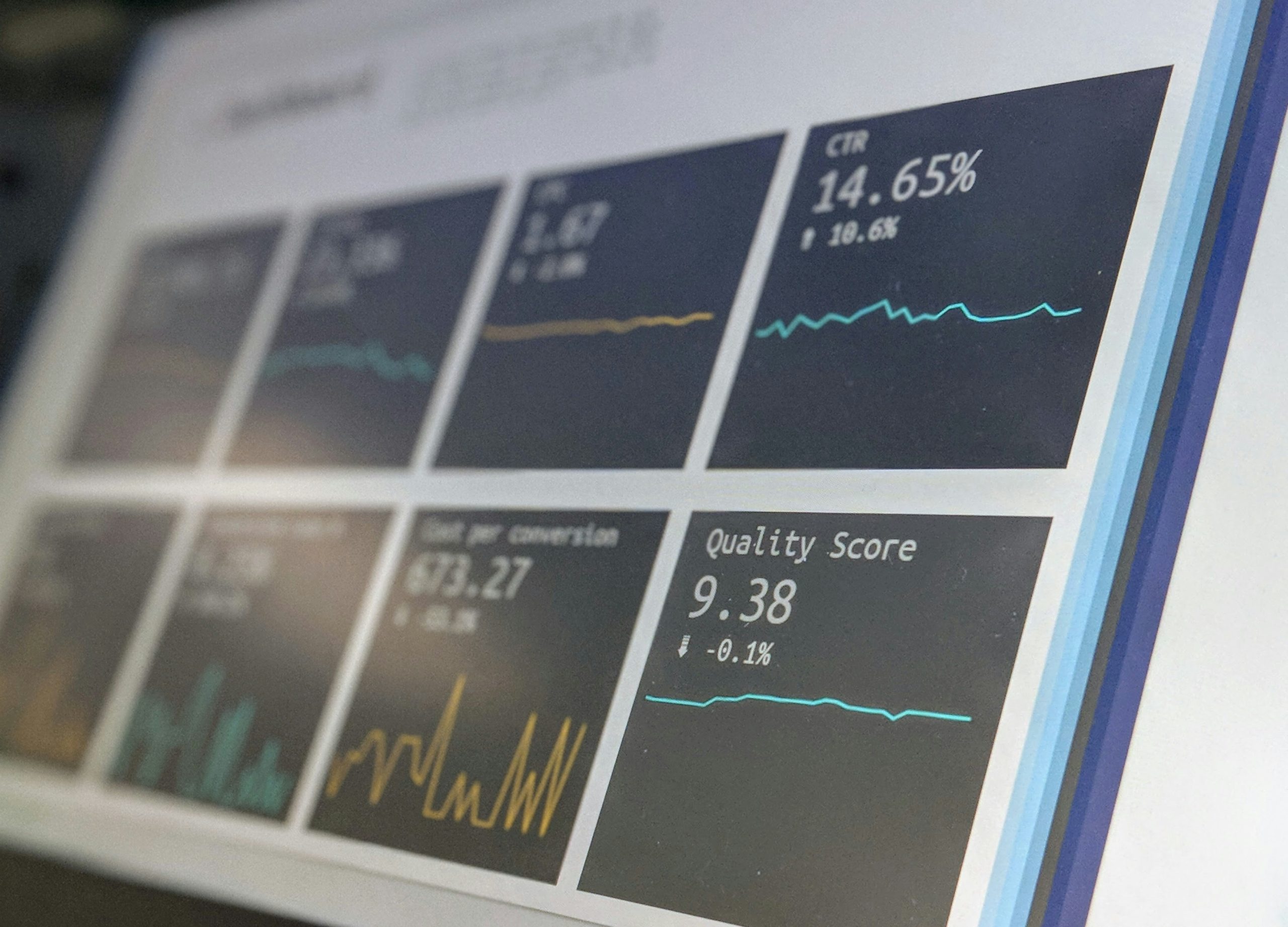
Modern brokerage dashboards provide granular data that was once reserved for institutional desks. As an IB leader, you should use these analytics to show prospective sub-partners exactly what the earning potential looks like. Show them the volume, the average trade duration, and the commission yields. When you treat your affiliate network like a data-driven business, you attract high-level partners who are looking for a professional environment rather than a hobby.
“The transition from a solo affiliate to a Multi-Tier IB is the exact moment you stop working for your money and start letting your network work for you.”
As you scale, consider the different management styles available. Some leaders prefer to oversee the entire process, while others utilize systems like PAMM account brokers to handle the heavy lifting of asset management. Regardless of your choice, the key is to remain adaptable. The most successful networks in 2026 are those that embrace change, leverage high-performance tools like cTrader, and prioritize the success of the traders they refer. Your wealth is a direct reflection of the value you provide to your sub-partners.
Andrews, 2026.
FAQ
What is the difference between a standard affiliate and a multi-tier IB?
A standard affiliate earns a one-time CPA or recurring commission only from their direct referrals. A multi-tier IB, however, earns from their direct clients plus a percentage of the volume generated by sub-affiliates they have recruited into the network, creating multiple levels of income.
How do I track secondary and tertiary commissions?
Tracking is handled through a sophisticated back-office dashboard provided by the broker. Modern platforms like Coinstrat Pro offer real-time transparency, allowing you to see every trade made by sub-referrals and the resulting commission credited to your account instantly.
Do multi-tier programs require a financial license?
Generally, being an affiliate or Introducing Broker (IB) is a marketing role and does not require a financial license in many jurisdictions, as you are not managing funds or providing personal investment advice. However, you should always check local regulations in your specific country.
Can I migrate my existing affiliate network to a multi-tier program?
Yes. Many professional IBs migrate their networks to take advantage of better technology and unlimited tiering structures. Most hybrid brokers offer support to help transition high-volume sub-partners and ensure their referral links are mapped correctly in the new system.