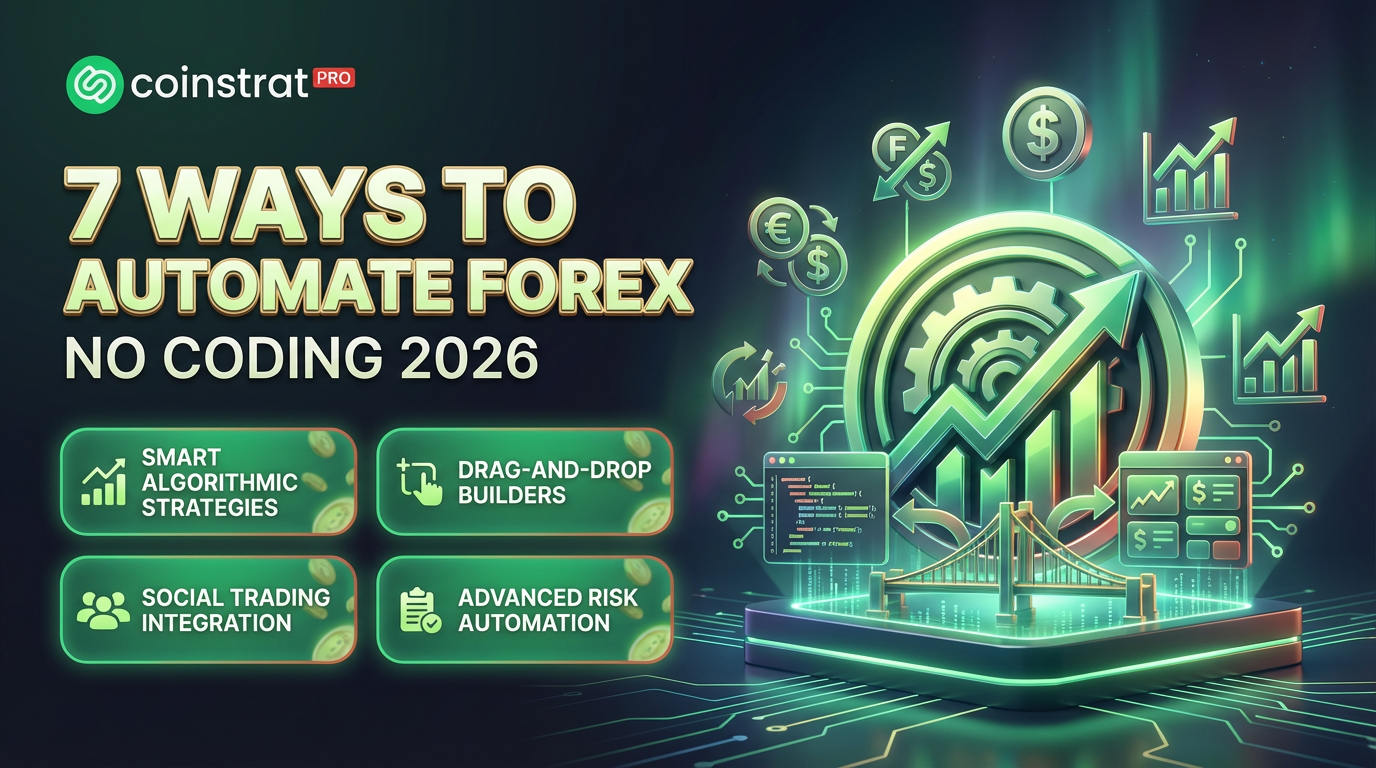
For years, the gateway to automated forex trading was guarded by a steep wall of syntax and logic. If you wanted to trade while you slept, you either had to master MQL4/C++ or hire a developer who might—or might not—understand the nuances of a Fibonacci retracement. It was a technical barrier that kept the most profitable strategies restricted to those with “developer” on their resume.
But the landscape has shifted. We are now in the era of the “Human API.” By leveraging sophisticated social trading infrastructure and hybrid brokerage models, retail investors can now achieve institutional-grade automation without writing a single line of code. The logic isn’t stored in a rigid .ex4 file; it’s live-streamed from the minds of professional traders into your account. This is the ultimate shortcut for those asking how to automate forex trading without coding while still maintaining the granular control of a quant fund.
The Evolution of Automation: Why Coding is No Longer Required
Forex automation has shifted from complex MQL4/5 coding to social replication technology. This allows traders to automate their portfolio by mirroring institutional-grade strategies in real-time, effectively using a ‘Human API’ where a professional master trader’s logic replaces the need for a programmed script. In the past, an Expert Advisor (EA) was a static set of rules. If the market changed from a trending environment to a range-bound nightmare, the EA would continue blindly executing its programmed instructions until the account hit zero.

The shift to social replication technology simplifies automated forex trading, making it accessible without coding expertise.
Modern managed accounts and social networks have replaced this rigidity with “Dynamic Intelligence.” When you automate through a social ecosystem, you are essentially “hiring” a person whose execution is automated via high-speed trade-copying engines. This provides the best of both worlds: the discipline and speed of a machine with the elective judgment of a human who can sit on their hands during high-impact news events like an NFP release or a sudden central bank pivot.
The Rise of Social Trading vs. Expert Advisors (EAs)
While EAs require constant backtesting, optimization, and a VPS to stay online, social trading automation is “server-side.” This means once you click ‘Follow,’ the broker’s infrastructure handles the rest. You don’t need to worry about your laptop shutting down or your internet flickering. Platforms like Coinstrat Pro utilize the cTrader terminal, which is natively built for this kind of high-stakes replication, ensuring that when a Master Trader enters a position, your account mirrors it in milliseconds.
Unlike EAs, social trading runs on robust server infrastructure, ensuring continuous operation without user intervention.
The Hybrid Advantage: 24/7 Crypto and FX Synergy
One of the biggest limitations of traditional forex automation was the weekend “gap.” Forex markets close, leaving your capital idle. However, the modern hybrid broker model allows for a multi-asset approach. You can automate your FX strategies during the week and transition into crypto-native strategies over the weekend, all within the same managed environment. This creates a continuous compounding machine that traditional, siloed brokers simply cannot match.

Hybrid brokers enable continuous trading by diversifying across FX and crypto, overcoming traditional market limitations.
7 Ways to Automate Your Trading Using Managed Accounts
If you’re looking for how to set up a forex managed account that runs on autopilot, you need to understand the different flavors of automation available in 2026. It isn’t just about clicking “copy”; it’s about how that capital is allocated and protected.
Automation Method Coding Required? Key Benefit Best For Social Copytrading Zero Real-time mirroring of pros Retail investors seeking passive alpha PAMM Accounts Zero Pooled capital, proportional gains Long-term wealth building MAM/LAMM Systems Zero Manual allocation control Sophisticated investors/Hedge funds Hybrid Crypto-FX Managed Zero 24/7 market exposure Aggressive growth seekers Reverse Copytrading Zero Profiting from failing strategies Contrarian traders Multi-Strategy Portfolios Zero Diversified risk across 10+ masters Risk-averse capital preservation Tiered IB Sub-Accounts Zero Automated commission compounding Partners and Influencers
1. Direct Social Copytrading (The Modern Standard)
This is the most direct answer to how to automate forex trading without coding. You browse a global leaderboard, analyze historical drawdowns, and hit “Copy.” The innovation here lies in the “Allocation Methods.” Unlike old systems that just copied a fixed lot size, modern platforms allow you to copy based on “Equity Ratio,” meaning if a Master Trader has $100,000 and you have $1,000, your trade sizes are automatically scaled down by 100x to keep your risk identical to theirs.

Direct social copytrading provides an intuitive way to automate forex by following expert traders via a simple interface.
2. Utilizing PAMM for Institutional Scaling
PAMM (Percentage Allocation Management Module) remains a staple for those who want a “set it and forget it” approach. In a PAMM environment, your funds are pooled with others. The manager trades the total pool, and profits are distributed proportionally. This is particularly effective for those looking at 7 Ways PAMM Account Brokers Revolutionize Multi-Asset Environments, as it simplifies the accounting of complex, diversified trades.
3. Multi-Asset Diversification via Hybrid Brokers
The smartest way to automate in 2026 is to avoid being a “one-trick pony.” By using a hybrid broker like Coinstrat Pro, you can automate a portfolio that spans FX, Metals, and Crypto. When the US Dollar is stagnant, your automated crypto strategies might be catching a weekend bull run. Using a single hub to manage these disparate assets ensures that your risk management remains centralized.
5 Steps to Set Up a Fully Automated Managed Account
To set up a forex managed account without coding: 1. Choose a hybrid broker with integrated copytrading. 2. Filter the leaderboard by risk/reward criteria. 3. Select an allocation method (e.g., Equity Lead or Lot-to-Lot). 4. Set hard equity risk limits. 5. Activate the ‘Copy’ function for 24/5 or 24/7 automation.

Setting up a fully automated managed account involves clear steps from broker selection to activating the copy function.
The setup process shouldn’t take more than 15 minutes, but the research phase is where the money is made. When you look at a Master Trader’s profile, don’t just look at the ‘Total Gain.’ Look at the Max Drawdown and the Average Trade Duration. An automated strategy that gains 500% but has a 90% drawdown is just a ticking time bomb.
Selecting the Right Allocation Method for Your Goals
Most traders fail because they use the wrong replication logic. If you choose “Fixed Lot,” and the Master Trader suddenly decides to double their position size, you could be over-leveraged instantly. By using “Equity-to-Equity” allocation, your account automatically adjusts its exposure based on your remaining balance relative to the Master’s. This is the “secret sauce” of code-free automation—it’s a dynamic risk engine that requires no maintenance from your side.
Setting Hard Stops: The Ultimate Risk Management Protocol
Automation does not mean abdication of responsibility. You must set “Equity Stop Loss” levels. This is a feature within the copytrading dashboard where you can dictate: “If my equity drops by 15%, stop all copying and close all positions.” This creates a circuit breaker that protects you from a Master Trader having a “bad day” or a black swan market event. You’re effectively building a safety net around your automated portfolio.
Why Traditional EAs Fail Where Managed Accounts Succeed
Traditional EAs often fail due to ‘curve fitting’ and an inability to adapt to fundamental shifts like central bank interest rate changes. Managed accounts through a master trader provide a human oversight element to the automation, ensuring the strategy adapts to current market volatility while still executing with machine-like speed. If you’ve spent any time in the forex forums, you’ve seen the graveyards of EAs that worked perfectly in a 2021 backtest but blew up in the 2024 inflationary environment.
The difference is “Contextual Awareness.” An EA doesn’t know that a war just broke out or that a central bank governor just gave a hawkish speech. It only sees price action. A Master Trader, however, can see the brewing storm and pause their automated execution tools until the dust settles. When you copy a master, you are copying their “discretionary filter” — something no no-code visual builder can truly replicate yet.
Managing Strategy Decay Without Revising Code
All strategies eventually “decay” as the market finds a new equilibrium. With an EA, you’d have to go back to the drawing board, re-code the indicators, and re-optimize. With a social automation platform, you simply “unfollow” the decaying strategy and “follow” a new one that is currently in sync with the market’s rhythm. You are the Fund Manager; the Master Traders are your employees. If one underperforms, you replace them. This is how you maintain a high-performance portfolio without ever needing to understand Python or MQL.
Scaling Your Automation: The IB and Master Trader Perspective
Automation isn’t just for the investor; it’s the ultimate tool for the entrepreneur. If you are a skilled trader, you can turn your personal account into a “Master Account.” In a hybrid ecosystem like Coinstrat Pro, your trades are broadcast to thousands of potential followers. You can then monetize this via six different fee structures—Management fees, Performance fees, or even Joining fees.
For Introducing Brokers (IBs), this automation allows for the creation of “Income Engines.” By referring clients to a reliable, automated managed account system, you ensure they stay active. The “Unlimited Level” IB structures found in modern hybrid firms mean you aren’t just earning from your direct referrals, but from the entire network they build. It transforms the role of an IB from a mere “referrer” to a wealth network architect.
“The goal of automation isn’t just to make money while you sleep; it’s to remove the human emotional biases that lead to catastrophic trading errors. Managed accounts provide the machine’s speed with the human’s wisdom.”
Managing Your Automated Multi-Asset Portfolio
Effective automation involves diversifying across asset classes. By using a single hub to automate FX, Metals, and Crypto, investors can offset volatility in one market with stability in another, all managed through the same allocation settings without manual intervention. This is why many are comparing Forex vs Multi-Asset Environments to see which provides the most stable automated returns.
Imagine your automated setup looking like this:
-
40% Allocation: Conservative Forex Master (Euro/USD focus)
-
30% Allocation: Gold (XAUUSD) Scalping Strategy
-
20% Allocation: Crypto Swing Trading (BTC/ETH focus)
-
10% Allocation: High-Yield, Aggressive Index Trading (NAS100)
By spreading your capital this way, you are creating an internal “hedge fund” that operates 24/7. Because a hybrid broker like Coinstrat Pro provides 1,200+ instruments, you never have to leave the platform to find a new niche to automate.
Rebalancing Your Copied Strategies
Automation does not mean you never look at your account again. Successful automated investors perform “Monthly Rebalancing.” This involves looking at your suite of Master Traders and deciding if their risk profiles still match your goals. If your Gold trader had a stellar month and now represents 60% of your account, you might “shave” some profits from that automation and reallocate them to a more stable FX strategy. This ensures that a single bad streak doesn’t wipe out your entire portfolio’s gains.
Conclusion: The Future is Code-Free
The era of the “lonely coder” is ending. In its place is a vibrant, interconnected ecosystem where expertise is the currency, and automation is the bridge. Whether you are a retail investor looking for professional alpha or a master trader looking to scale, the tools are now available to everyone. By choosing a hybrid broker with deep liquidity, lightning-fast execution, and a robust social framework, you can finally stop worrying about scripts and start focusing on your bottom line.
FAQ
Is copytrading considered automated trading?
Yes. While the strategy is originally conceived by a human (the Master Trader), the execution, sizing, and position management within your personal account are handled entirely by an automated replication engine. It removes the need for manual order entry.
Do I need a VPS for social copytrading?
Generally, no. Unlike Expert Advisors (EAs) that run on your local version of MetaTrader, social copytrading is usually executed on the broker’s servers. Your trades will be copied even if your computer is turned off and your phone is out of battery.
Can I automate crypto trading alongside forex?
Absolutely, provided you use a hybrid broker. This allows you to follow different masters for different asset classes or use a single, multi-asset master who trades both markets. This is one of the best ways to ensure 24/7 account activity.
What is the risk of ‘Slippage’ in automated managed accounts?
Slippage occurs when there is a price difference between the Master Trader’s entry and your entry. To minimize this, you should choose brokers with “Prime Liquidity” and millisecond execution speeds. Deep liquidity pools ensure that even if thousands of followers copy a single trade, the impact on price is negligible.
Actionable Step: Start by browsing a live leaderboard today. Don’t look at the ‘All-time Profit’ first—sort by ‘Sortino Ratio’ or ‘Max Drawdown’ to find the traders who provide the most stable, automated growth. Small, consistent wins are the foundation of a long-term automated portfolio.