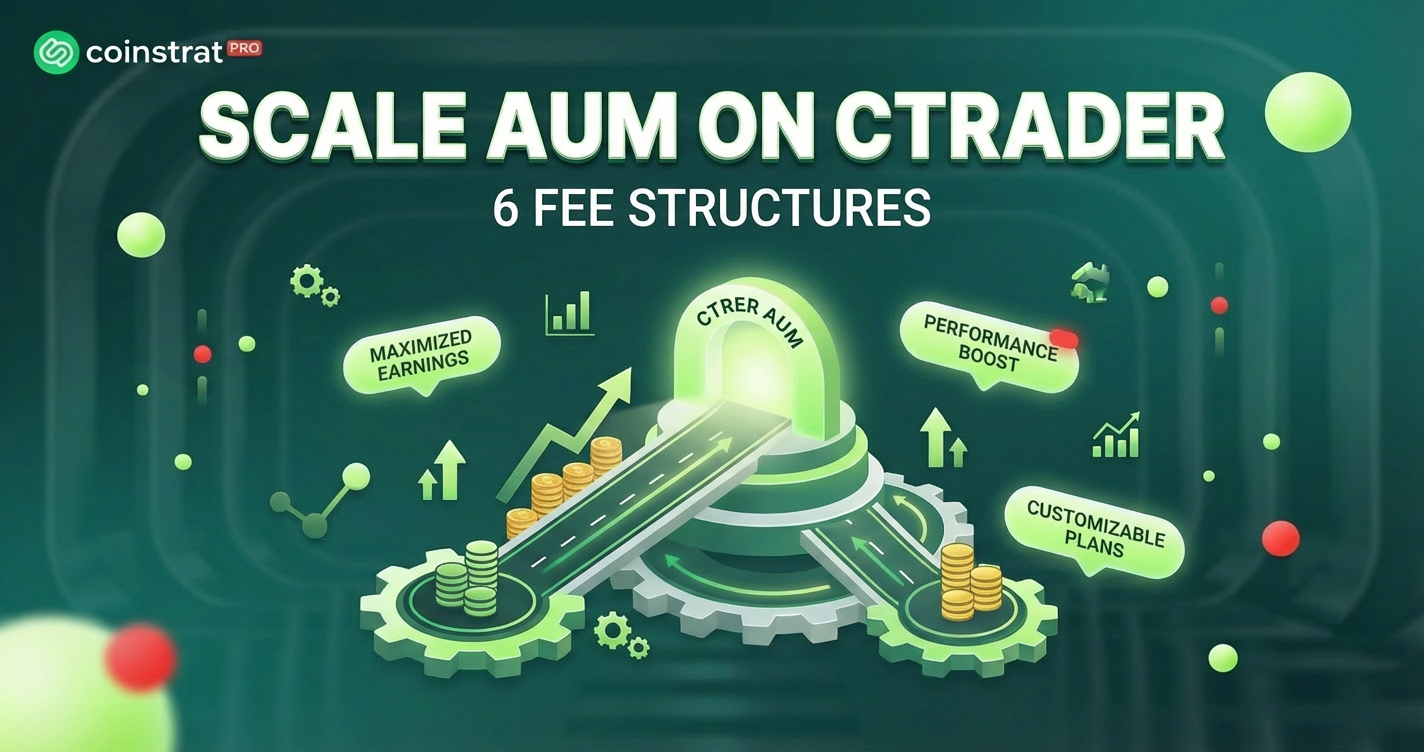
The transition from a successful solo trader to a professional money manager is often stalled by a single, frustrating bottleneck: capital. You might have the most consistent edge in the world, but if you are only trading a $5,000 personal account, your financial growth is linear and agonizingly slow. Scaling Assets Under Management (AUM) is the only way to turn a skill set into a scalable business. In 2026, the most friction-free pathway to this transition is through high-performance copytrading ecosystems.
I remember the first time I moved my strategy to a public leaderboard. I expected the technical setup to be a nightmare of API keys and server maintenance. Instead, modern terminals have baked these features directly into the interface. For those looking to monetize their alpha, understanding how to become a signal provider on cTrader is the first step toward institutional-grade scaling.
The Technical Framework: How to Become a Signal Provider on cTrader
Becoming a signal provider on cTrader involves opening a ‘Provider’ account within the terminal, setting your strategy visibility to public, and defining your fee structure. Performance is tracked in real-time on a global leaderboard, allowing investors to discover and mirror your trades automatically using various allocation methods. Unlike older legacy platforms, cTrader integrates the “Copy” functionality directly into the sidebar, meaning your strategy is visible to every user on that broker’s network from the moment you hit “Start Providing Strategy.”
Step-by-Step Configuration for Maximum Visibility
- Account Preparation: You must use a live trading account. While some platforms allow demo providers, serious AUM only follows real “skin in the game.” Ensure your account has sufficient history (at least 30 days) to pass basic discovery filters.
- The “Become a Provider” Toggle: In the cTrader Copy tab, select your account and click “Become a Provider.” Here, you will name your strategy. Pro tip: Avoid generic names like “Best Trader 2026.” Use names that describe your methodology, such as “Mean Reversion Indices” or “Low Drawdown FX.”
- Defining Visibility: You can choose between “Public” (appears on the global leaderboard) or “Private” (accessible only via a direct link). For those working with an Forex social trading network, public visibility is essential for organic growth.
- Selecting Allocation Ethics: cTrader uses an equity-to-equity ratio model. This means if you have $1,000 and a follower has $10,000, their trade size will be 10x yours. As a provider, you don’t need to worry about the math; the server handles the proportional execution instantly.
Visibility isn’t just about being on a list; it’s about the data. cTrader provides followers with “Time Weighted ROI,” “Maximum Drawdown,” and “Profit Factor.” If you want to scale, your focus must be on smoothing out the equity curve rather than hunting for 1,000% returns in a week. Institutional-grade followers look for the “Calmar Ratio”—the relationship between your annual return and your maximum drawdown.
Monetization Strategy: How to Charge a Subscription Fee for Trading Signals
One of the most common questions from professional traders is how to actually get paid. When you charge subscription fee for trading, you are essentially creating a recurring revenue stream that is independent of market volatility. However, the most successful providers don’t just pick one fee; they create a hybrid structure that aligns their interests with their followers.
Advanced platforms like Coinstrat Pro allow you to combine multiple fee types. This flexibility is what separates a “hobbyist” signal provider from a professional wealth manager. Here is a breakdown of how you should structure your monetization:
| Fee Type | How it Works | Best For… |
|---|---|---|
| Performance Fee | A percentage of the net profit you generate (e.g., 20% of gains). | Aligning interests; you only get paid when the follower wins. |
| Management Fee | A percentage of the total capital following you (per annum). | Stable income regardless of market conditions; rewards AUM growth. |
| Volume Fee | A fixed amount charged per million USD traded. | High-frequency scalpers who provide deep liquidity and high turnover. |
| Joining Fee | A one-time flat fee to start following the strategy. | Exclusivity; discouraging “strategy hopping” by retail users. |
To maximize your net profit, you should consider the psychology of your target audience. Retail investors often prefer performance-only models, while more sophisticated investors understand that a management fee is necessary to keep a professional operation running. If you are looking to maximize net profit, a “High Water Mark” performance fee is standard practice. This ensures you only earn fees on new profits, protecting investors from paying for the same gain twice after a drawdown period.
Maximizing AUM through Multi-Asset Strategy Diversification
To attract significant capital as a signal provider, you must demonstrate consistency across multiple asset classes including FX, metals, and indices. The era of the “FX-only” trader is fading. Modern hybrid brokers allow you to trade crypto 24/7 alongside traditional markets, providing more opportunities to generate signals and maintain ‘active’ status for your subscriber base. If the EUR/USD is stuck in a 20-pip range for three days, but Gold (XAUUSD) or Bitcoin (BTC) is trending, your ability to shift alpha-seeking to those markets keeps your subscribers engaged.
Accessing a vast array of instruments—often upwards of 1,200+ on platforms like Coinstrat Pro—gives you a tactical advantage. Here’s why diversification helps scale AUM:
- Reduced Correlation: By trading Indices and Crypto alongside FX, your strategy’s overall volatility may decrease, leading to a better risk-adjusted return profile.
- Consistent Signal Flow: Markets move in cycles. When the stock market is flat, the FX market might be volatile due to central bank announcements. Being a multi-asset provider means your “shop” is always open.
- Higher Retention: Followers hate inactivity. If you don’t trade for a week because your specific setup didn’t appear in one pair, they might leave. Diversification allows you to find setups more frequently without lowering your entry criteria.
For those interested in how this compares to older managed account models, exploring multi-asset PAMM environments can offer insights into how institutional capital flows between different asset classes. As a signal provider, you are essentially running a mini-hedge fund; your portfolio construction matters as much as your individual trade execution.
Risk Management Controls for Professional Signal Providers
Your “Provider” profile is your resume. However, it only takes one “black swan” event to ruin a track record and send your AUM to zero. Professional providers must utilize granular risk controls like equity-based stop losses and custom risk ratios to protect their followers’ capital. Transparent risk management is the primary factor that institutional-grade copytraders look for when selecting a master trader to follow.

“The goal of a professional signal provider is not to be right 100% of the time, but to ensure that when they are wrong, it doesn’t end the game.”
On the cTrader terminal, risk is managed at the technical level through millisecond execution. This is critical for social trading because “slippage” is the enemy. If your trade executes at 1.1000 and your 500 followers execute at 1.1005 because of slow infrastructure, your reported profit will be far higher than their actual profit. This discrepancy leads to negative reviews and capital flight. Using a broker with prime liquidity ensures that your signals are mirrored with surgical precision.
Three Golden Rules of Risk for Providers:
- Hard Equity Stop: Always set a “Stop Providing” level on your own account. If your equity drops below a certain point, all positions close and the strategy pauses. This transparency builds immense trust with high-net-worth followers.
- Avoid Over-Leveraging: Even if your broker offers 1:500 leverage, your strategy should be modeled on 1:10 or 1:20. Followers often increase their own risk ratios; if you are already at the limit, you leave them no room to breathe.
- Communicated Drawdowns: Use the strategy description to explain what an “expected” drawdown looks like. If followers know a 10% dip is part of the plan, they won’t panic-sell at the bottom.
For a deeper dive into what makes a platform reliable for these kinds of operations, check out the key features of top social trading platforms. Understanding the infrastructure—from data centers to liquidity providers—is what separates a pro trader from someone just “playing the markets.”
Monetizing Your Influence: The Role of the Multi-Level IB
Scaling AUM isn’t just about trading; it’s about distribution. This is where the synergy between being a signal provider and an Introducing Broker (IB) becomes powerful. As a master trader, you can recruit your own followers and earn not just the performance fees, but also a portion of the spread or commission from their trades.
In the Coinstrat Pro ecosystem, this is taken a step further with “Unlimited Level” IB structures. This means if you are a signal provider and you recruit an influencer who then recruits 1,000 followers, you earn commissions from that entire tree. This dual-income stream—Performance Fees + IB Commissions—is the fastest way to build wealth in the fintech space today. You aren’t just trading; you are building a financial network. This model is particularly effective when navigating Forex vs Multi-Asset environments, as you can earn commissions across a wider variety of instruments like Crypto and Stocks, which often have different commission profiles than standard FX pairs.
Actionable Steps to Get Started Tonight
Success as a signal provider is 20% setup and 80% consistency. Don’t wait for the “perfect” month of returns to start. The leaderboard rewards longevity.
- Download the cTrader terminal and link your live account.
- Set up your provider profile with a clear, professional description.
- Start with a “Performance Fee” only model to build your initial “Trust Score” on the leaderboard.
- Once you have $50,000+ in following AUM, introduce a small Management Fee to cover your operational costs.
- Share your cTrader invitation link on your social channels to begin your journey as a Multi-level IB simultaneously.
FAQ
Do I need a VPS to be a signal provider on cTrader?
No, you do not strictly need a VPS to provide signals on cTrader because the copying process happens at the server level. Once you place a trade on your terminal (mobile or desktop), the broker’s server pushes that trade to all followers instantly. However, using a VPS is still recommended for automated strategies (EAs) to ensure your own trades execute without local internet interruptions.
Can I charge multiple types of fees simultaneously?
Yes. Many professional providers on cTrader-integrated platforms like Coinstrat Pro combine a Performance Fee (e.g., 20% of profits) with a Management Fee or a Volume Fee. This allows for a diversified income stream that rewards both trading skill and the scale of your following network.
What is the minimum track record required to appear on the global leaderboard?
While technical requirements vary by broker, most leaderboards require at least 30 days of active trading history and a minimum number of trades (usually 10-20) to ensure the ROI data is statistically relevant. Strategies with higher “Trust Scores” and longer histories are prioritized in discovery filters.