If you have spent any time in the social trading trenches, you’ve likely noticed a Great Divide. On one side, you have the “old guard”: the veteran forex social trading networks where EUR/USD is king and traders obsess over 2-pip movements. On the other side, a new breed of multi asset copy trading environments is emerging, where a single portfolio might hold Japanese Yen, Nvidia stock, Bitcoin, and Gold.
For the retail investor, this isn’t just a matter of “more buttons to click.” It is a fundamental shift in how “alpha”—that elusive 시장-beating return—is generated and protected. In the 2026 market landscape, the “pure-play” Forex trader is finding it increasingly difficult to compete with hybrid masters who can hedge a currency crash with a commodity surge. But this diversity comes with a hidden cost: complexity. Managing risk across different asset classes requires a level of infrastructure that most legacy platforms simply weren’t built to handle.
Asset Volatility and Its Impact on Social Trading Performance
Forex markets generally exhibit lower volatility with high liquidity, making them ideal for high-frequency social trading. In contrast, Crypto and Metals offer higher volatility, providing larger profit potential but requiring tighter risk controls. A hybrid platform allows investors to balance these profiles within a single diversified portfolio to mitigate sector-specific crashes. To understand why this matters, we have to look at how different assets move over time.

Understanding the distinct volatility of Forex and Crypto markets is crucial for effective social trading strategies.
Standard Deviation: Comparing Pip Movements vs. Percentage Swings
In the Forex world, we talk in pips. A “massive” move in the GBP/USD might be 1.5% in a day. In the Crypto or Small-cap Stock world, a 1.5% move is a quiet Tuesday morning. For a social trader, if your Master Trader moves from trading FX to trading Altcoins without adjusting their position sizing, your account balance will experience a heart-stopping rollercoaster ride. The best social trading platforms today utilize automated “volatility scaling” to ensure that a 1-lot trade in Forex doesn’t carry the same catastrophic weight as a 1-lot trade in a volatile index or coin.
Liquidity Gaps: Why Execution Speed Matters
Execution speed is the silent killer of copy trading returns. In the highly liquid FX market, slippage is usually minimal because there is almost always a counterparty. However, in multi-asset environments—specifically during “Flash Crashes” in Crypto or after-hours gaps in Stocks—the price the Master Trader gets and the price the Follower gets can diverge wildly. This is where high-performance terminals like cTrader, used by providers such as Coinstrat Pro, become essential. By offering millisecond execution, these platforms minimize the “latency tax” that erodes the profits of followers who are mirroring fast-moving strategies.
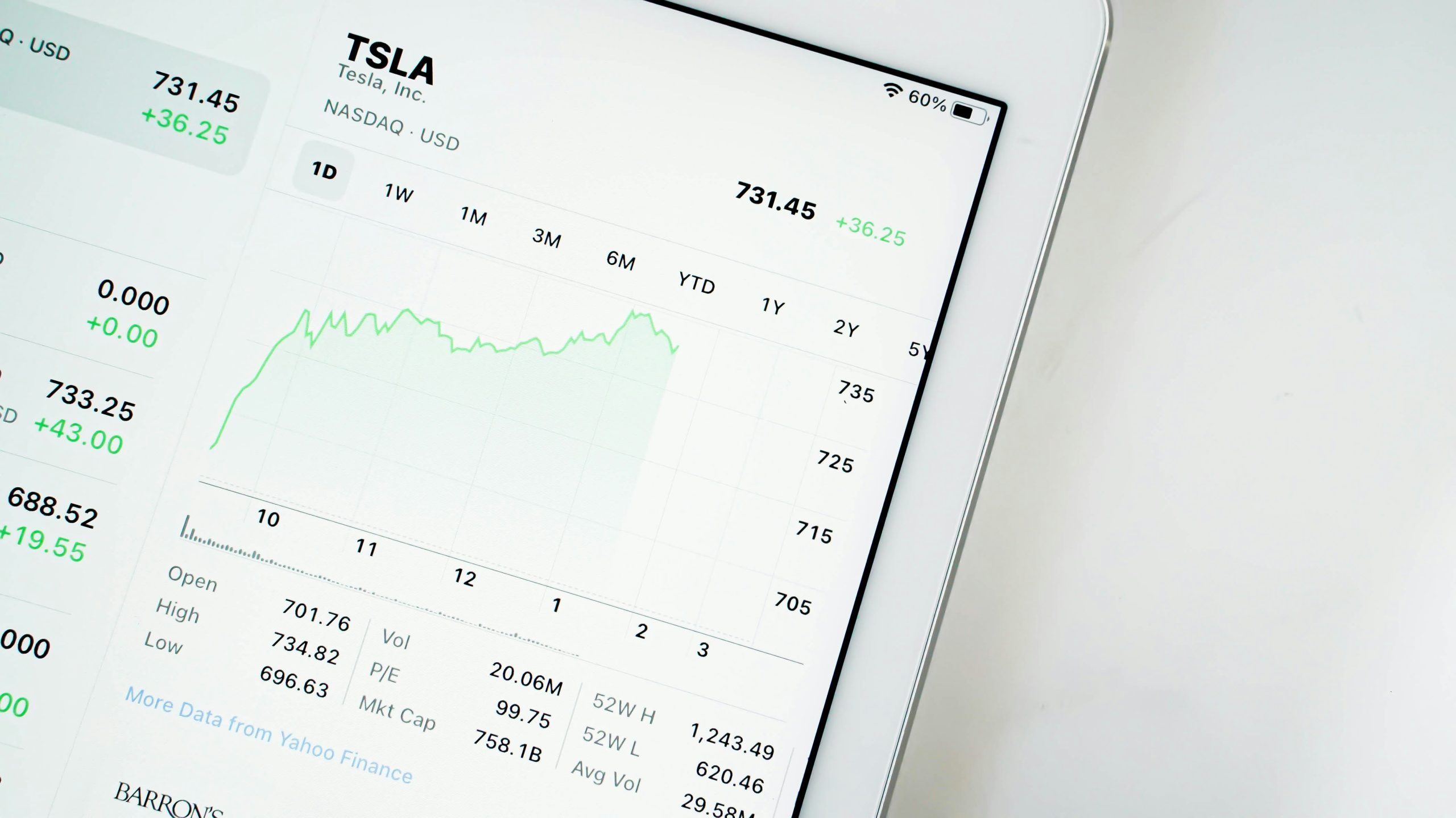
Fast execution speed is critical in multi-asset trading to minimize slippage during volatile market events.
Market Hours: The 24/5 vs. 24/7 Social Trading Dilemma
Forex traders get the weekend off. Crypto traders do not. For a Master Trader managing a multi-asset portfolio, this creates a unique challenge. If a Master Trader holds a leveraged FX position over the weekend while aggressively trading Crypto on a Saturday, the margin requirements can shift. A follower on a legacy platform might find their FX positions liquidated on a Sunday night because their “available margin” was eaten up by a volatile Saturday Bitcoin swing. True multi-asset ecosystems solve this by separating margin pools or providing granular “asset-specific” risk settings.

The contrasting market hours of Forex and Crypto present unique challenges for managing multi-asset trading portfolios.
Feature Forex Exclusive Environment Multi-Asset Hybrid Environment Volatility Profile Low to Moderate (1-2% daily) High (5-15% daily in Crypto/Tech) Diversification Limited (Currency correlations) Extensive (Stocks, Metals, Crypto) Risk Management Basic (SL/TP, Drawdown limits) Advanced (6+ Allocation methods) Trading Hours 24/5 (Mon-Fri) 24/7 (Continuous via Crypto/Indices) Profit Potential Consistent, lower-beta returns Explosive, high-alpha opportunities
Strategic Allocation: Why Forex and Crypto Require Different Mirroring Logic
When copy trading, Forex positions often utilize ‘Balance Proportional’ allocation due to stable lot sizes. However, volatile assets like Crypto or Indices benefit from ‘Equity Proportional’ or ‘Fixed Lot’ methods to prevent a single market swing from over-leveraging the account. The reality is that the “one-size-fits-all” copy method is the primary reason why retail investors lose money even when following profitable traders.
Consider the “Balance Proportional” method. If a Master Trader has $10,000 and you have $1,000, the system opens 10% of their trade size on your account. In Forex, this works beautifully. But if that Master Trader suddenly decides to “YOLO” into a high-leverage Gold trade that consumes 50% of their margin, your $1,000 account might not have the buffer to survive the spread. This is why modern platforms allow you to choose from various allocation methods:
-
Equity Proportional: Adjusts sizes based on real-time equity (including open P/L), which is safer for high-volatility assets.
-
Fixed Lot: Regardless of what the Master does, you only ever risk a set volume (e.g., 0.01 lots).
-
Lot-to-Lot: You mirror the exact volume of the Master, used primarily by high-net-worth followers.
By using a platform that supports these granular choices, you can effectively “neuter” the risks of a volatile trader while still capturing their upside. For instance, you might follow a Crypto master with a “Fixed Lot” setting to limit exposure, while following a conservative FX master with “Balance Proportional” to maximize compounding.
“The secret to long-term social trading success isn’t finding a trader who never loses; it’s using an allocation method that ensures their loss doesn’t become your liquidation.”
Forex Social Trading Networks vs. Multi-Asset Ecosystems: The Infrastructure Gap
Legacy forex social trading networks are often limited to MT4/MT5 environments with restricted asset classes. Modern multi-asset platforms, like those utilizing cTrader, offer millisecond execution across 1,200+ instruments, enabling master traders to hedge FX positions with Gold or Crypto during periods of high USD volatility. The difference isn’t just cosmetic; it’s structural.

Modern multi-asset trading platforms provide advanced tools and infrastructure for diverse financial strategies.
Most traditional brokers operate on a “siloed” server model. If a Master Trader is on Server A and you are on Server B, there is an inherent delay. In a multi-asset “Hybrid” model, like the one pioneered by Coinstrat Pro, the infrastructure is integrated. This prevents the “Cold Start” problem where strategies are locked into specific servers. Instead, a Master Trader can draw liquidity from FX providers, Crypto exchanges, and Stock ECNs simultaneously, presenting a unified performance curve to the follower.
Bridging the Gap: Spot vs. CFD
One of the quiet revolutions in the multi-asset space is the ability to hold “Spot” assets alongside “CFD” trades. Many traders use the interest rates generated from holding stablecoins or spot crypto to fund the swap fees on their leveraged FX positions. This type of sophisticated financial engineering is impossible on a platform that only supports currency pairs. For Master Traders, this flexibility is a magnet for “Smart Money” followers who want professional-grade portfolio management rather than just simple gambling.
Scaling AUM for Master Traders
If you are a Master Trader, a multi-asset environment offers a much higher ceiling for your Assets Under Management (AUM). Professional investors rarely want to put all their capital into a single FX bot. They want a “Global Macro” approach. By trading across 1,200+ instruments, you prove your ability to navigate different market cycles—inflationary (Commodities), risk-on (Stocks/Crypto), and defensive (FX/Bonds).
Risk Management Features: Best Social Trading Platforms for Asset Diversification
The best social trading platforms in 2026 provide cross-asset risk management, allowing users to set hard equity triggers. While FX traders focus on drawdowns, multi-asset investors must monitor ‘Correlation Risk’—ensuring that a dip in Tech Stocks doesn’t mirror a dip in Crypto, potentially doubling the portfolio risk. Without these tools, diversification is merely an illusion.
Hard Equity Stop Losses: The Universal Safety Net
The most important tool in your arsenal is the “Total Equity Stop Loss.” This is a platform-level setting that says: “If my total account value drops below $800, close all positions and stop all copying.” In a multi-asset world, this is your only defense against a “Black Swan” event that hits multiple sectors at once. Whether you are copy trading or participating in Coinstrat’s dual investment options, having a hard exit point is what separates professionals from hobbyists.
The Power of Reverse Copying
Some platforms allow for “Reverse Copying,” a feature that turns a losing strategy into a winning one. In high-volatility environments like Crypto, where “retail fever” often leads to predictable mistakes, a multi-asset platform allows an investor to mathematically “fade” a failing trader. This transforms volatility from a threat into a harvestable resource.
The IB Perspective: Why Multi-Asset Wins
For Introducing Brokers (IBs) and affiliates, the multi-asset model is purely a numbers game. In a traditional forex social trading network, your commission stops when the market closes on Friday. In a multi asset copy trading ecosystem, your clients are trading 24/7. Moreover, a platform that offers “Unlimited Level” IB structures—where you earn from your direct referrals and their referrals to infinite depth—allows for exponential growth that a single-tier FX broker cannot match.
Actionable Takeaways for 2026
-
Diversify by Correlation, Not Just Name: Don’t follow three different Crypto masters. Follow one FX master, one Gold/Commodity specialist, and one Crypto native.
-
Audit the Execution: Use the premium features of your platform to check the “Slippage Report.” If your multi-asset provider is losing you more than 0.5% per trade in slippage, move to a hybrid broker with deeper liquidity.
-
Adjust Your Scaling: Use Equity Proportional allocation for any Master Trader who touches Crypto or Indices to protect against margin spikes.
-
Leverage the “Swap-Free” Advantage: If you plan on following long-term trend followers, ensure your account tier supports swap-free (Islamic) options to avoid daily interest charges eating your alpha.
The “winner” in the Forex vs. Multi-Asset debate is clear: Multi-asset environments provide the tools to survive the volatility that Forex-only platforms often succumb to. By treating your social trading account like a mini-hedge fund rather than a mirror, you position yourself to capture returns regardless of which market is trending.
FAQ
Can I set different stop losses for Forex and Crypto trades within the same account?
In a standard account, stop losses are usually set per trade by the Master Trader. However, advanced hybrid platforms allow followers to set ‘Granular Risk Ratios’ where you can reduce the multiplier for Crypto trades specifically, effectively creating a tighter risk ceiling for volatile assets compared to your FX exposure.
How does slippage differ between major FX pairs and Altcoin markets in a copy trading environment?
Major FX pairs benefit from massive liquidity, meaning slippage is often near-zero on high-performance terminals like cTrader. Altcoin markets, especially during high volatility, have thinner order books, which can lead to ‘Execution Gap’ slippage. Using a broker with institutional-grade liquidity providers is the only way to mitigate this.
Is it better to follow specialized masters or multi-asset master traders?
It depends on your existing portfolio. Following specialized masters (one for FX, one for Crypto) gives you the ‘Lego-block’ control to balance your own diversification. Multi-asset masters are better for passive investors who want a professional to handle the rotation between risk-on (Crypto/Stocks) and risk-off (FX/Gold) environments for them.
How do swap fees affect long-term FX positions compared to holding Crypto spot?
FX positions are leveraged CFDs that incur ‘Swaps’ (interest) every night you hold the position. This can eat into profits over months. In contrast, holding ‘Spot’ Crypto involves no leverage and thus no swap fees, making it much cheaper for long-term ‘HODL’ strategies within a social trading context.