The transition from a successful solo trader to a high-tier Master Trader is often blocked by a “liquidity ceiling.” You might have a strategy that nets 15% monthly on Gold (XAU/USD), but the moment you try to manage $5 million in Assets Under Management (AUM), your execution slips, your entry prices drift, and your followers start complaining about slippage. Scaling isn’t just about trading better; it’s about the plumbing of your business.
To scale AUM today, you need to capitalize on the two most liquid yet volatile markets on the planet: Gold and Oil. These assets are the pulse of global geopolitics. Whether it’s a central bank policy shift or a supply disruption in the Middle East, these instruments offer the “volatility premium” that investors crave. However, managing this volatility for hundreds of followers requires institutional infrastructure for master traders that can handle the load without breaking. Here is the blueprint for moving from a retail participant to a professional asset manager using the dual engines of XAU/USD and WTI Crude.
Step 1: Selecting Your Multi-Asset Infrastructure on cTrader
To optimize commodities trading, Master Traders should leverage the cTrader terminal for its millisecond execution and deep liquidity. On Coinstrat Pro, this involves selecting a ‘Raw’ account to access 0.0 pip spreads on XAU/USD and WTI, ensuring that high-frequency strategies aren’t eroded by wide markups during volatile sessions. In the institutional world, a 1-pip difference in spread across a $10 million aggregate position isn’t just a cost—it’s the difference between a top-quartile performance and a mediocre one.

Execution speed is the primary bottleneck when trading Gold. During high-impact news events, such as NFP or CPI releases, the Gold market can move $20 in seconds. If your platform delays execution by even 500 milliseconds, your followers’ entry prices will be significantly worse than yours. Using trading gold and oil on cTrader provides a technical advantage due to its proprietary Pass-Through processing, which connects directly to Tier-1 liquidity providers. This ensures that when you click “buy” at $2,450.50, your followers get as close to that price as humanly possible.
Configuring for Dual-Chart Dominance
As a Master Trader, your workspace shouldn’t look like a retail setup. You are monitoring correlations. Often, a spike in Crude Oil (WTI) precedes inflationary fears, which subsequently drives Gold higher. Your cTrader interface should be configured with:
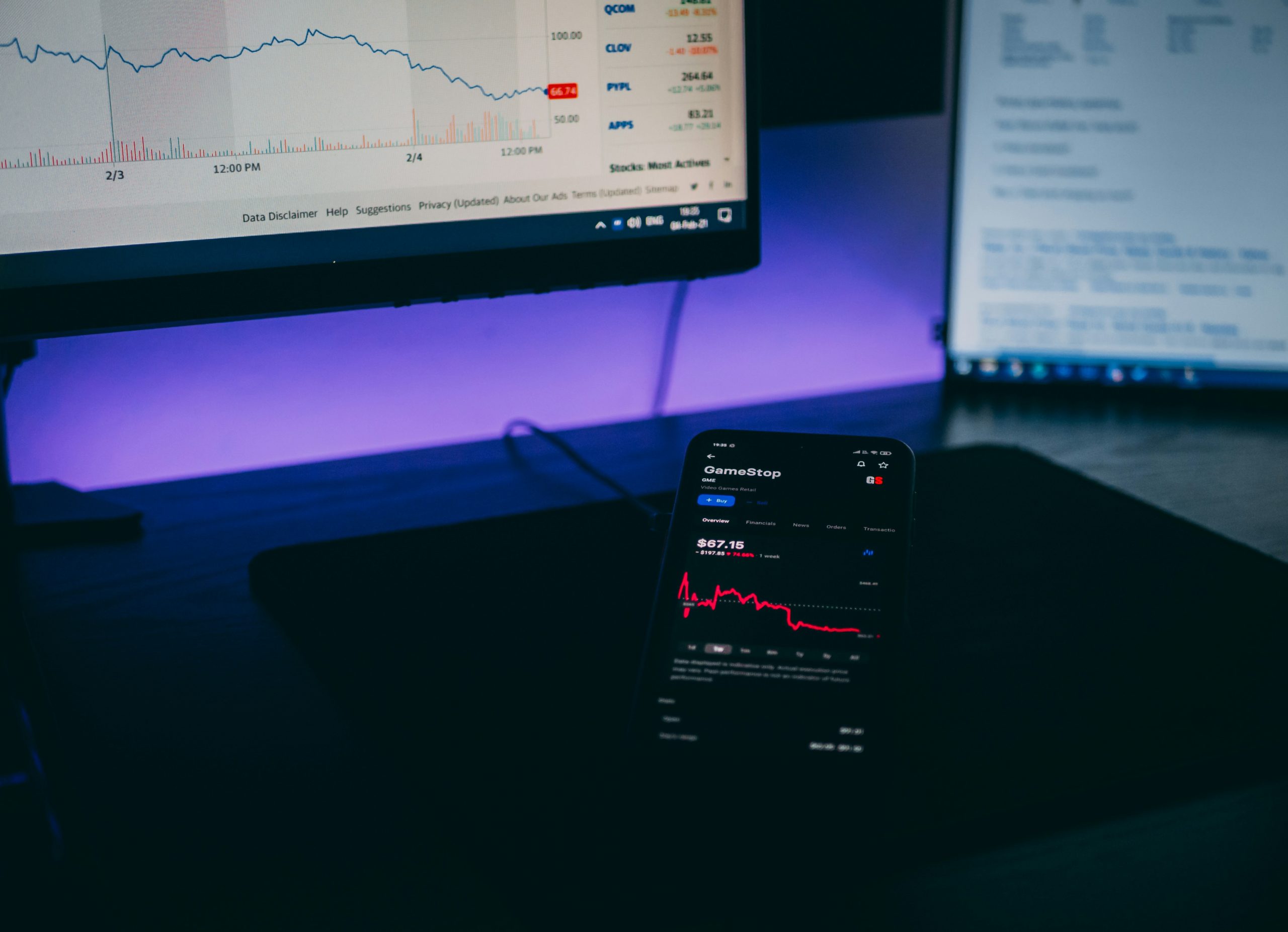
- Detached Chart Windows: Keep Gold on a 5-minute timeframe for entries and Oil on a 1-hour timeframe to monitor the broader energy trend.
- Depth of Market (DoM): Use the cTrader DoM feature to see where the big “walls” of liquidity sit. This allows you to scale out of large positions without moving the market against your own followers.
- One-Click Trading with Safety Latency: Ensure your execution is set to “Instant” but with a pre-defined slippage cap to protect the collective equity of your pool.
By establishing this level of technical rigor, you demonstrate to potential high-net-worth investors that you aren’t just a “lucky” trader, but a professional operating within a robust framework. Those interested in the underlying shifts of the industry might find it useful to read about 2025 – The Era of Prop Trading? 4 Market Trends to understand how the broader market is moving toward these institutional models.
Step 2: Designing a Custom Fee Structure for Commodity Alpha
Coinstrat Pro allows Master Traders to go beyond simple profit sharing by implementing six distinct fee types. For gold and oil, traders often combine a ‘Management Fee’ for steady AUM growth with a ‘Performance Fee’ to reward high-alpha generated during geopolitical price surges, maximizing revenue as investors flock to haven assets. Traditional models often limit you to a 20% profit share, but when you are managing the intense volatility of WTI Crude, your compensation should reflect the complexity of the task.
The strategy for scaling AUM involves diversifying your income streams so that you remain profitable even during “flat” market periods. Below is a comparison of how a Master Trader can structure their monetization on a hybrid platform like Coinstrat Pro versus a traditional retail broker.
| Fee Type | Traditional Broker Model | Coinstrat Pro Hybrid Model | Strategic Benefit for Commodities |
|---|---|---|---|
| Performance Fee | Fixed (usually 20-30%) | Flexible (0% to 50%+) | High rewards for catching $100 Gold swings. |
| Management Fee | Rarely Available | Annualized % of AUM | Provides stable income during low-volatility Oil periods. |
| Volume Fee | None | Per-lot fee traded | Captures value from high-frequency scalping strategies. |
| Joining Fee | None | One-time entry fee | Filters for serious investors and covers onboarding costs. |
For a Master Trader focusing on trading gold and oil on cTrader, the “Volume Fee” is particularly lucrative. Because commodities often require multiple entries and scaling (layering positions), the aggregate volume can be massive. Even a small per-lot fee can become a significant secondary revenue stream alongside performance-based rewards. This is a key reason why many are moving away from restrictive environments; you can see more on this in the discussion about Self-Trading or Prop Trading? Which Is Safer and More Efficient.
Step 3: Implementing Advanced Risk Controls for Gold Volatility
Master Traders must utilize granular risk management tools to protect their ‘Copy’ pool. This includes setting hard equity stop-outs and utilizing the six allocation methods on Coinstrat Pro—such as ‘Equity to Equity’—to ensure that followers’ accounts mirror the professional’s risk-reward ratio precisely during $100+ gold swings. When the market moves violently, a “fixed lot” copy method can be disastrous for a follower with a smaller balance. If you trade 10 lots of Gold on a $100,000 account, a follower with $1,000 who is forced to copy 0.1 lots will be over-leveraged by 10x.

To prevent “Copy Pool Wipeouts,” professional masters implement three layers of risk protection:
- The Drawdown Decelerator: As your daily drawdown approaches a specific limit (e.g., 3%), the platform can be set to automatically reduce the copy ratio for all followers, effectively “lightening the ship” without closing positions prematurely.
- The Volatility Buffer: Gold and Oil are prone to “gaps”—price jumps that happen over weekends or during thin liquidity. Master Traders should use the “Equity to Equity” allocation method, which ensures that each follower’s position size is dynamically calculated based on their real-time balance relative to the Master’s balance.
- Reverse Copy Protection: In rare instances of extreme market irrationality, some advanced managers use a “Reverse Copy” secondary account to hedge the primary pool’s exposure, though this is typically reserved for institutional-grade hedging strategies.
“True institutional scaling isn’t measured by how much you make when you’re right; it’s measured by how little your followers lose when you’re wrong.”
Managing the “Maximum Drawdown” (MDD) is what attracts institutional IBs. An Introducing Broker with a network of wealthy clients will not refer them to a Master Trader who has a 40% MDD, regardless of the returns. By utilizing the risk management tools inherent in institutional infrastructure for master traders, you can keep your MDD under 10%, making you a “magnet” for high-balance investors and professional IBs. If you are training to reach this level, understanding the mechanics of a prop firm challenge can help refine your disciplined approach to risk.
The Role of Deep Liquidity in Scaling
You cannot scale AUM to the multi-million dollar level if your broker is “B-Booking” your trades (taking the opposite side). In a B-Book model, the broker loses money when you win. This leads to terminal “latency” and rejected orders when you try to execute large positions in Gold.
Coinstrat Pro’s Prime Liquidity model is essential here. By aggregating price feeds from multiple Tier-1 banks and non-bank liquidity providers, the platform ensures that even during a “flash crash” in Oil, there is always a buyer or seller on the other side. This “A-Book” execution means the broker’s interests are aligned with yours: they want you to trade more volume and manage more AUM because they earn from the clearing, not your losses. For Master Traders, this transparency is the foundation of trust required to grow a global following.
Market Trends: Why Gold and Oil in 2026?
As we move through 2026, the global economy is facing a “higher for longer” interest rate environment combined with shifting energy transitions. According to recent market data, Gold (XAU/USD) has established a new floor near the $2,400 mark, while WTI Crude remains sensitive to OPEC+ production quotas. This creates a “Traders’ Market”—one where price doesn’t just go up or down in a straight line, but oscillates with enough frequency to provide daily opportunities. By positioning yourself as a Master Trader specializing in these “macro-sensitive” assets, you offer a service that traditional stock-and-bond portfolios cannot replicate.
Actionable Steps to Get Started
- Open a cTrader Master Account: Select the ‘Raw’ account type to ensure your performance isn’t hindered by high spreads.
- Upload Your Track Record: If you have history from another platform, use tools like Myfxbook to verify your consistency, then sync it with the Coinstrat Pro leaderboard.
- Set Your Risk Parameters: Define your “Hard Stop” at the account level. For example, if the Master Account drops by 15%, all copying is paused. This transparency builds immense trust with followers.
- Engage with IBs: Use the “Unlimited Level” IB program to incentivize partners. Offer them a share of your performance or management fees in exchange for bringing in AUM. This is how you bridge the gap from $50,000 to $5,000,000 in managed assets.
Scaling as a Master Trader is a journey from “trading PnL” to “managing a business.” By combining the technical prowess of trading gold and oil on cTrader with the sophisticated monetization and risk tools of a hybrid broker, you position yourself at the top of the financial food chain. The volatile markets of 2026 are not a threat; they are the very fuel your AUM growth needs.
FAQ
Can I set different performance fees for gold versus oil strategies?
While most systems apply a flat fee to the entire account, Master Traders on Coinstrat Pro can utilize multiple sub-accounts. You can operate a “Gold Alpha” account with a higher performance fee due to its high-intensity nature, and a separate “Energy Trend” account for Oil with a lower fee but perhaps a higher management fee for long-term holders.
Is there a limit to how many followers I can have during high-volatility events?
Thanks to the Prime Liquidity and institutional-grade infrastructure, there is no hard cap on the number of followers. The system is designed to execute millions of trades simultaneously. The only limit is the aggregate market liquidity for the asset you are trading, which is why Gold and Oil (the most liquid commodities) are ideal for large-scale copytrading.
How does Coinstrat Pro protect my intellectual property as a Master Trader?
Your specific strategy, indicators, and “secret sauce” remain hidden. Followers see your entry and exit points and your performance metrics, but they do not see your underlying charts, custom AI tools, or proprietary indicators. This allows you to monetize your skills without revealing the logic behind your edge.
Can I trade both spot and futures-based commodities under one Master account?
Yes. The multi-asset nature of the platform allows you to manage spot XAU/USD and various energy-related ETFs or instruments from the same master dashboard. This provides a comprehensive way to hedge and diversify your followers’ exposure under a single unified AUM umbrella.